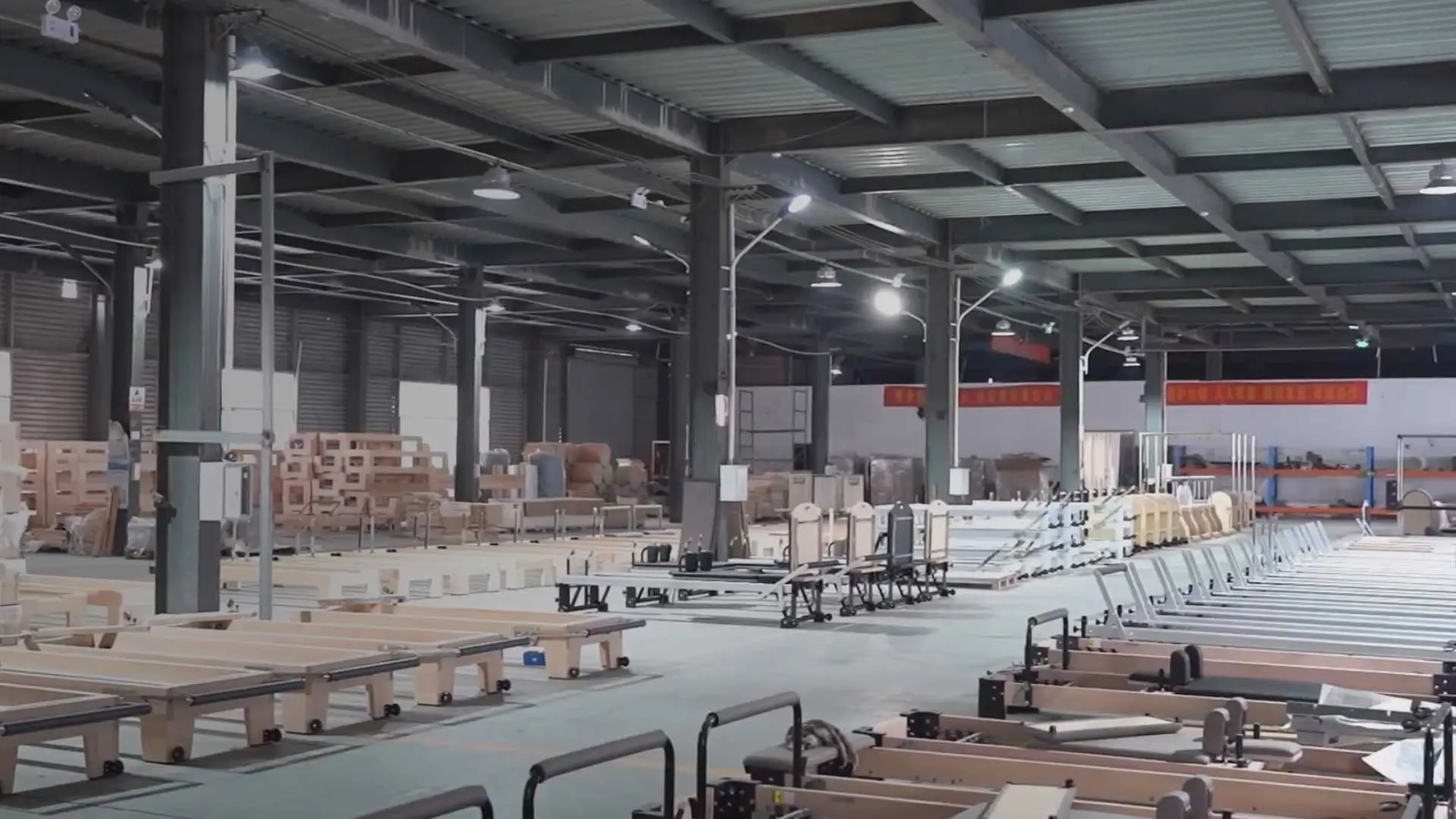
When you search for a Pilates reformer manufacturer on Google, Chatgpt/ Claude/ Alibaba, and you’ll find a dozens of Pilates equipment suppliers in no time.
And, well, they all seem to have quite a lot in common.
Maple wood Reformers? Aluminum Reformers? Different spring resistance, adjustable footbars, and OEM customization? Yes, those too.
The prices, however, can be different.
So, how do you decide which manufacturer is worth working with? Do you go for the lowest price? the highest sales volume? Or brand?
Personally, I think there’s something far more important.
Can this manufacturer produce Pilates equipment to your agreed specifications, maintain the same quality, and deliver your order on time?
That’s what I’d want to know before placing an order.
I’ve written this guide for Pilates studios, rehabilitation centers, distributors, and private-label brands around the world. If you’re currently comparing Pilates equipment suppliers, I hope it helps make the process a little easier.
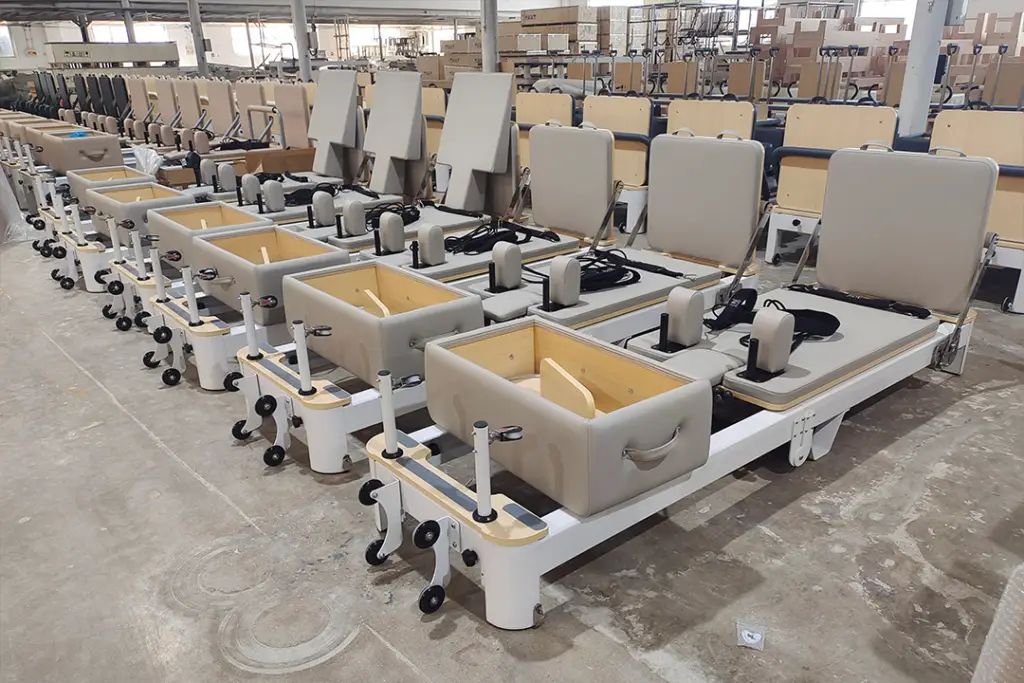
Table of contents
- 1. How to Find and Evaluate a Pilates Reformer Manufacturer
- 2. How to Verify Pilates Reformer Material Specifications
- 3. How to Evaluate Manufacturing Equipment and Assembly Quality
- 4. Check What the Warranty Actually Covers
- 5. How to Request and Approve a Pilates Reformer Sample
- 6. How to Compare Quotations, MOQ, and Bulk Prices
- 7. What Should You Confirm Before Signing a Purchase Contract?
1. How to Find and Evaluate a Pilates Reformer Manufacturer
Google, AI search tools, Alibaba, and industry trade shows are all useful places to start looking for suppliers.
So, congratulations! You’ve found some potential manufacturers.
That’s the easy part.
Now comes the slightly less exciting, but much more important, job of finding out which ones you can actually trust.
I’d suggest shortlisting three to five companies and sending each of them the same purchasing requirements.
Step 1: Send a Supplier Evaluation Form
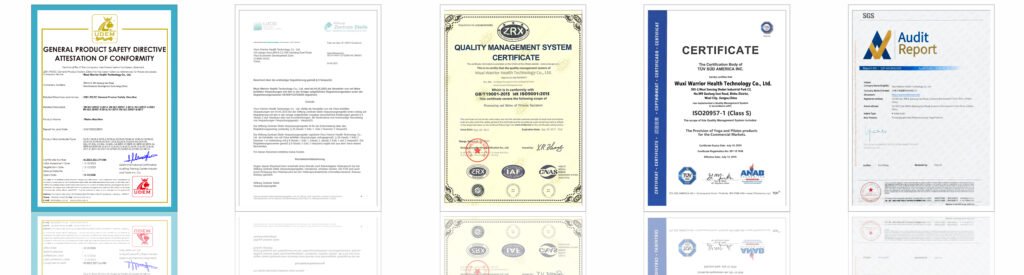
Before asking for prices, I like to find out a little more about the company itself.
| What to check | What to request |
| Business license | Registered company name, business registration number, address |
| Factory location | Actual manufacturing address, factory videos |
| Factory size | Workshop area, production lines |
| Employees | Production workers, engineers, QC staff |
| Equipment | CNC machines, cutting machines, assembly equipment |
| Production capacity | Monthly output, current orders |
| Quality control | Inspection procedures and completed records |
| Export experience | Previous export projects, packing and shipping documents, customer purchases and subsequent customer feedback |
Step 3: How do you distict Pilates Reformer Manufacturer or Trading Company?
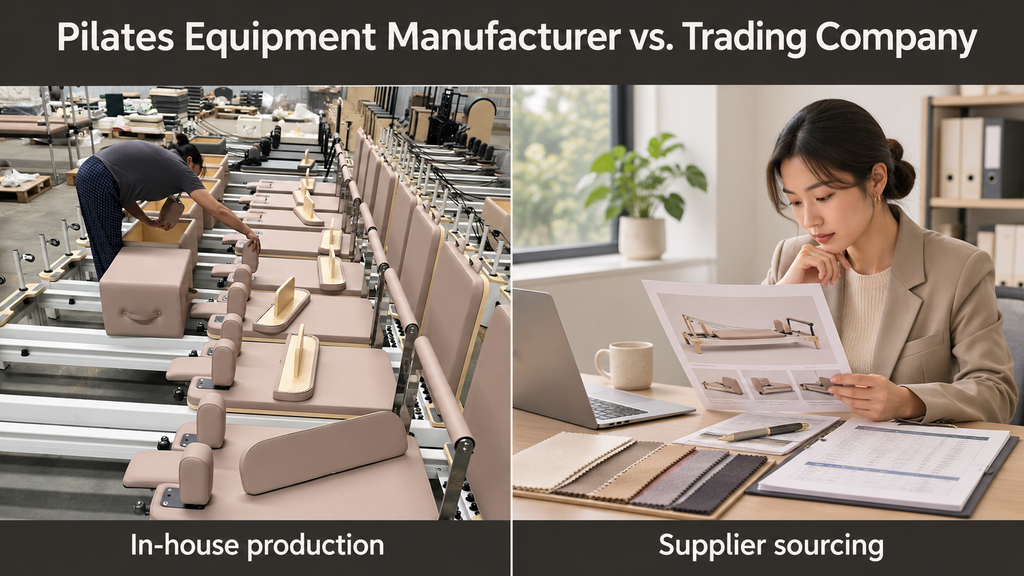
There’s another question worth asking: are you dealing directly with a Pilates reformer factory, or with a trading company?
A manufacturer should be able to explain which production processes it performs, show relevant workshop operations, and provide a realistic manufacturing schedule.
A trading company may coordinate production through several factories instead.
That isn’t necessarily a bad thing.
In fact, trading companies can be useful when you’re purchasing Pilates equipment, yoga accessories, and other products from several suppliers. They may offer convenient one-stop sourcing, communication, and after-sales coordination.
The important thing is transparency.
If a Pilates reformer supplier says it manufactures your equipment, ask to see how.
How Is a Commercial Pilates Reformer Manufactured?
A reliable Pilates equipment factory should be able to explain how its products move from engineering drawings to finished machines.
Here’s what that process generally looks like.
- Engineering Design and Technical Approval
Engineers prepare CAD drawings, a bill of materials (BOM), and technical specifications. These define frame dimensions, aluminum profiles, spring configurations, carriage travel, intended load requirements, and OEM details.
- Raw Material Procurement and Inspection
Aluminum profiles are checked for alloy grade, wall thickness, dimensions, and surface defects. Wooden components require moisture and workmanship checks. Springs, bearings, wheels, ropes, and upholstery are inspected against agreed specifications.
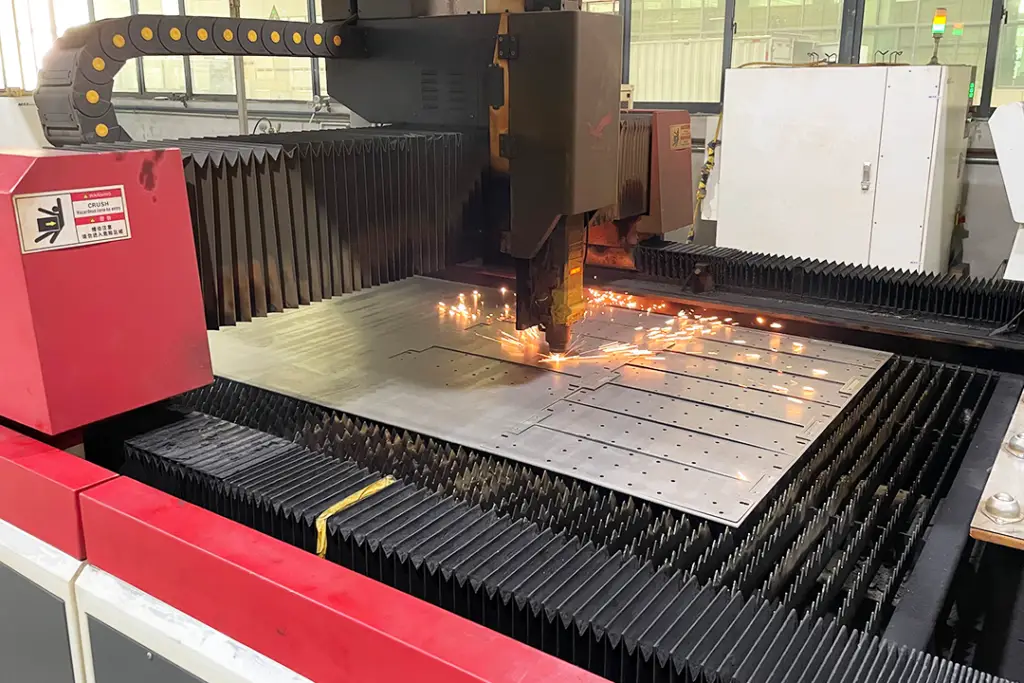
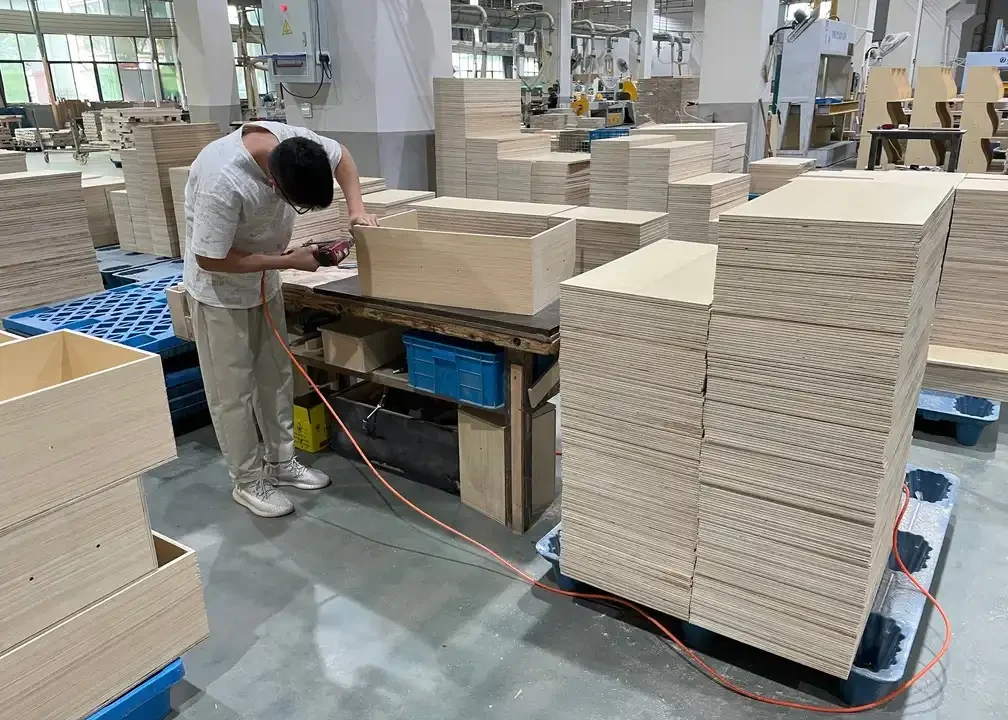
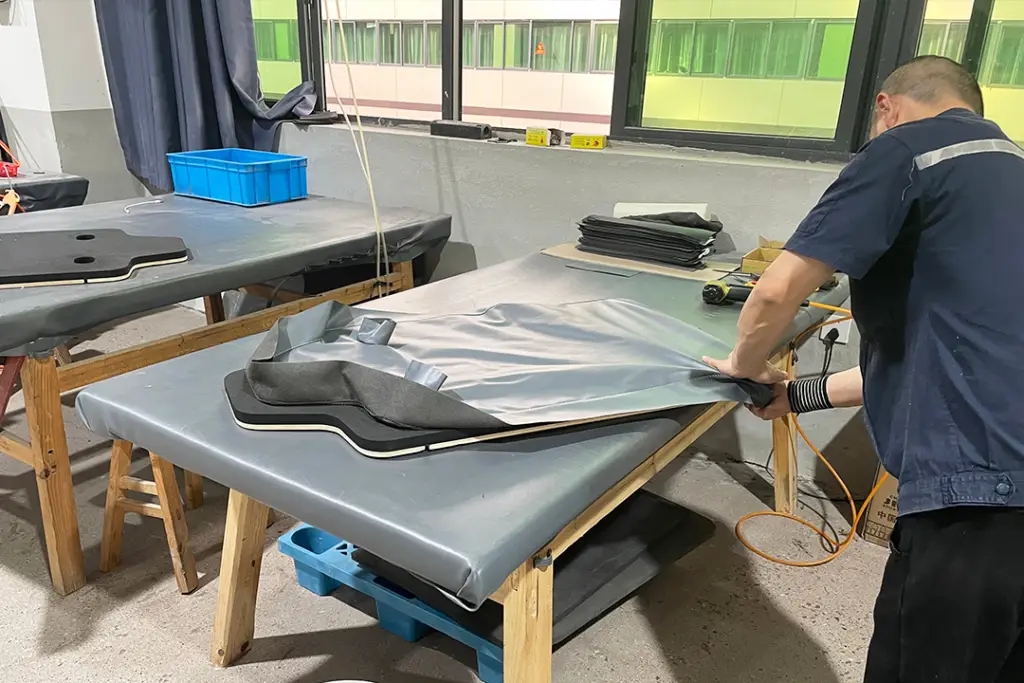
- Cutting, CNC Machining, and Frame Fabrication
Aluminum profiles are cut, drilled, machined, and deburred according to engineering drawings. Wooden frames undergo cutting, machining, joint preparation, and sanding. Steel structures may require bending or welding.
Critical dimensions, especially rail mounting points and structural connections, are checked before assembly.
- Surface Finishing and Component Preparation
Aluminum components may be anodized or coated, while wooden frames are sanded and finished. Carriages, bearings, wheels, springs, and upholstered parts are prepared for assembly.
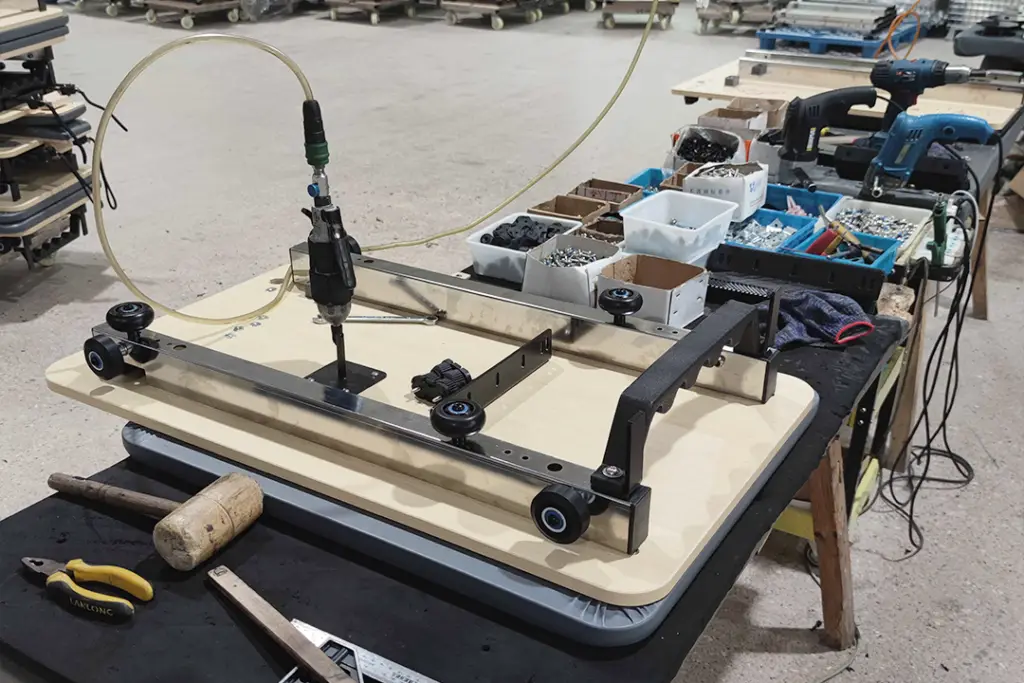
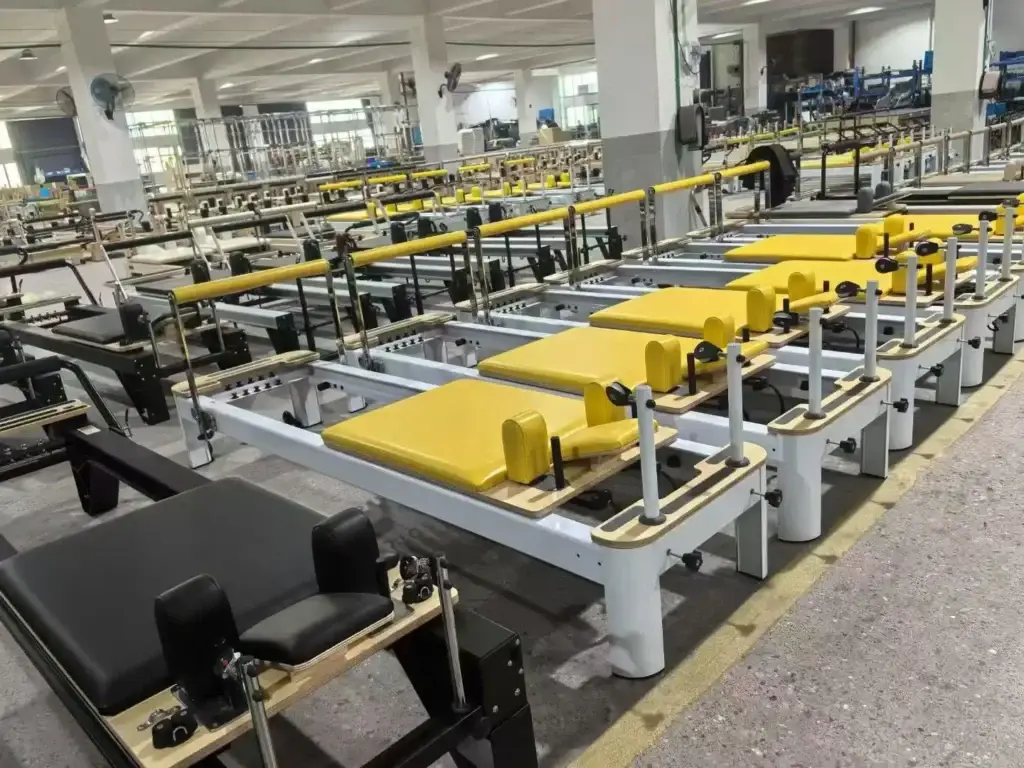
- Assembly
Technicians install the frame, rails, carriage, footbar, springs, ropes, pulleys, and accessories.
Rail alignment, carriage clearance, fastener security, and locking mechanisms are checked against the assembly requirements.
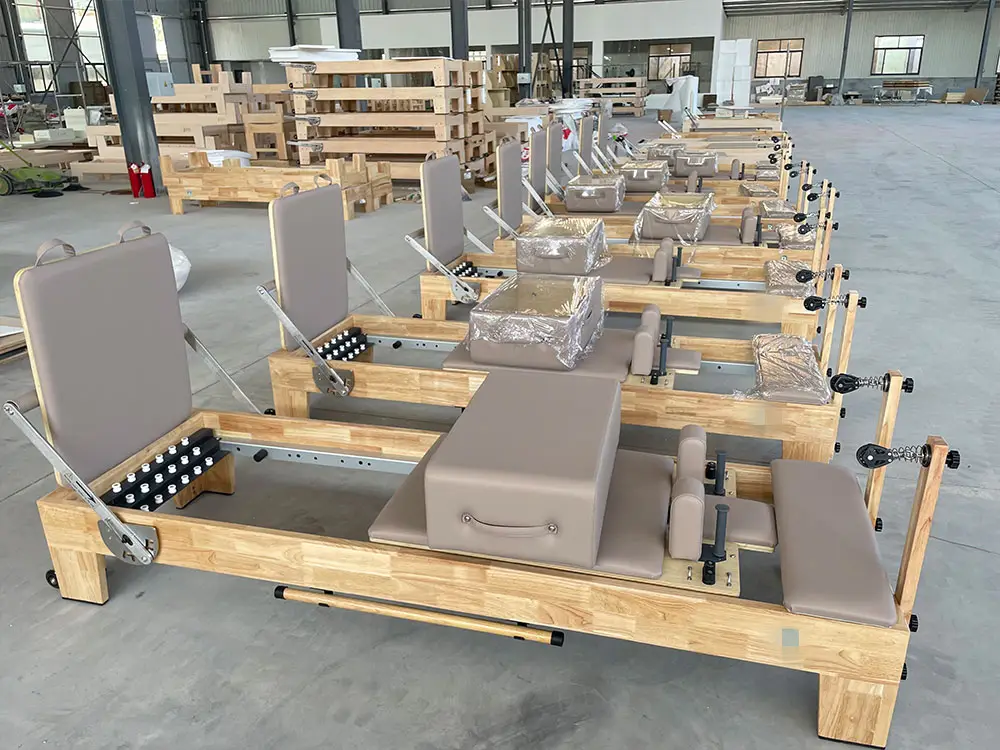
- Quality Inspection and Functional Testing
Finished Reformers undergo visual, dimensional, and functional checks.
These include smooth carriage movement, secure spring attachments, footbar locking, frame stability, and accessory completeness.
Separate design-validation tests may also be needed to establish structural and durability performance.
- Packaging and Shipment
Once approved, the equipment is protected and packed for transportation. Frames, rails, upholstery, and loose accessories need suitable protection against damage.
The exact manufacturing route will depend on the model, materials, and factory.
And that’s really the point: a supplier should be able to show you its actual process, rather than simply handing over a generic factory introduction.


2. How to Verify Pilates Reformer Material Specifications
Once you’ve checked the company’s info, it’s time to look at the Pilates equipment.
I mean finding out exactly what materials you’re paying for.
Aluminum Frames: There’s More to It Than 6063 Aluminum
If a supplier tells me reformer uses 6063 aluminum, I’d want to know as below:
- Alloy and temper: For example, 6063-T5.
- Profile dimensions: Cross-section drawings and nominal wall thickness.
- Surface finishing: Anodizing or coating requirements.
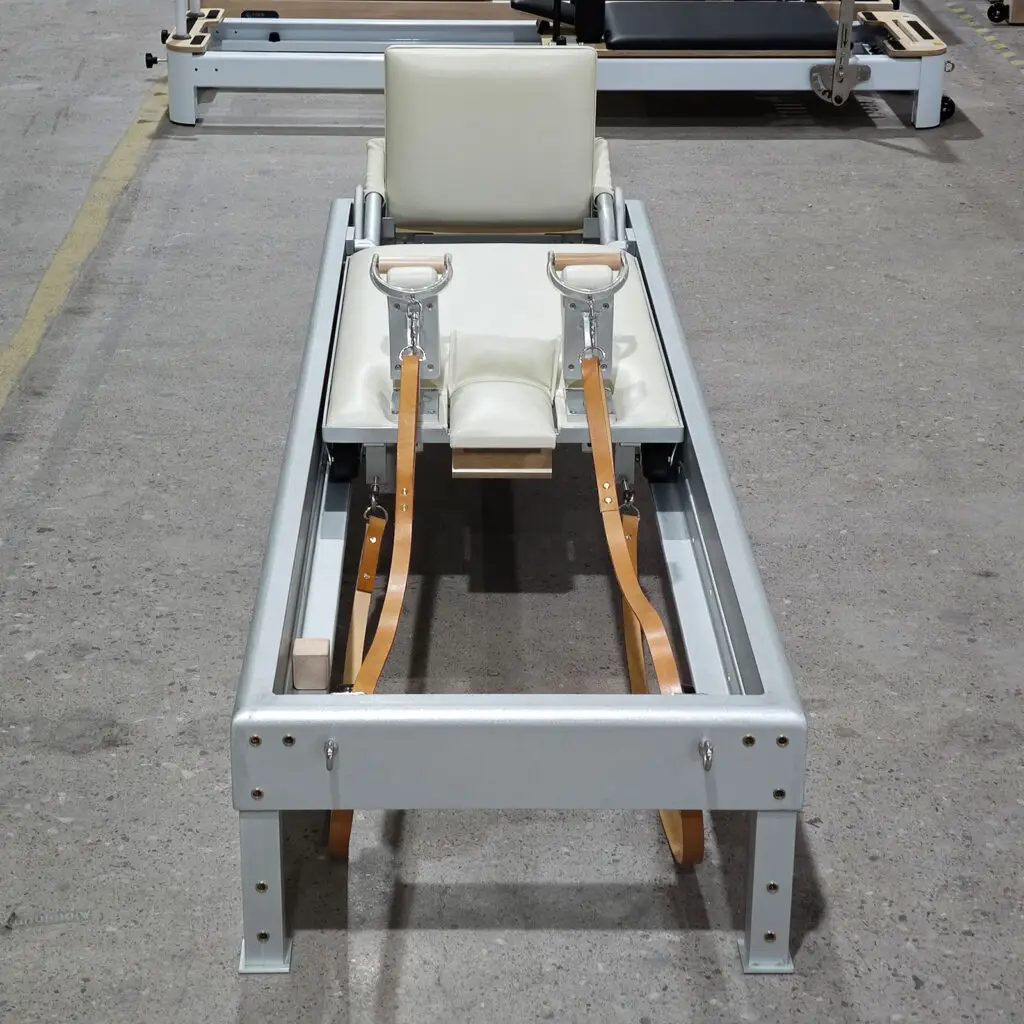
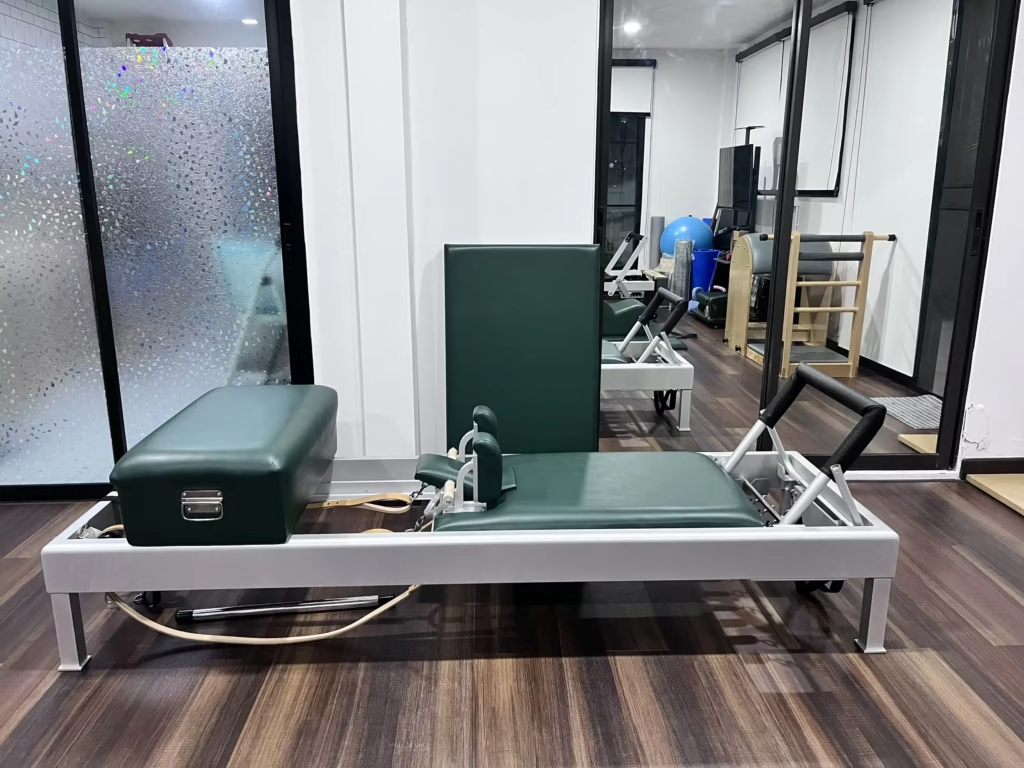
Springs: Check the Material and Resistance
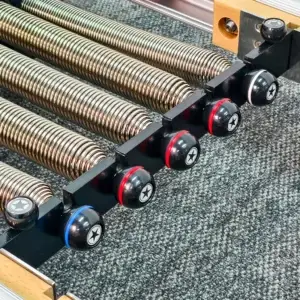
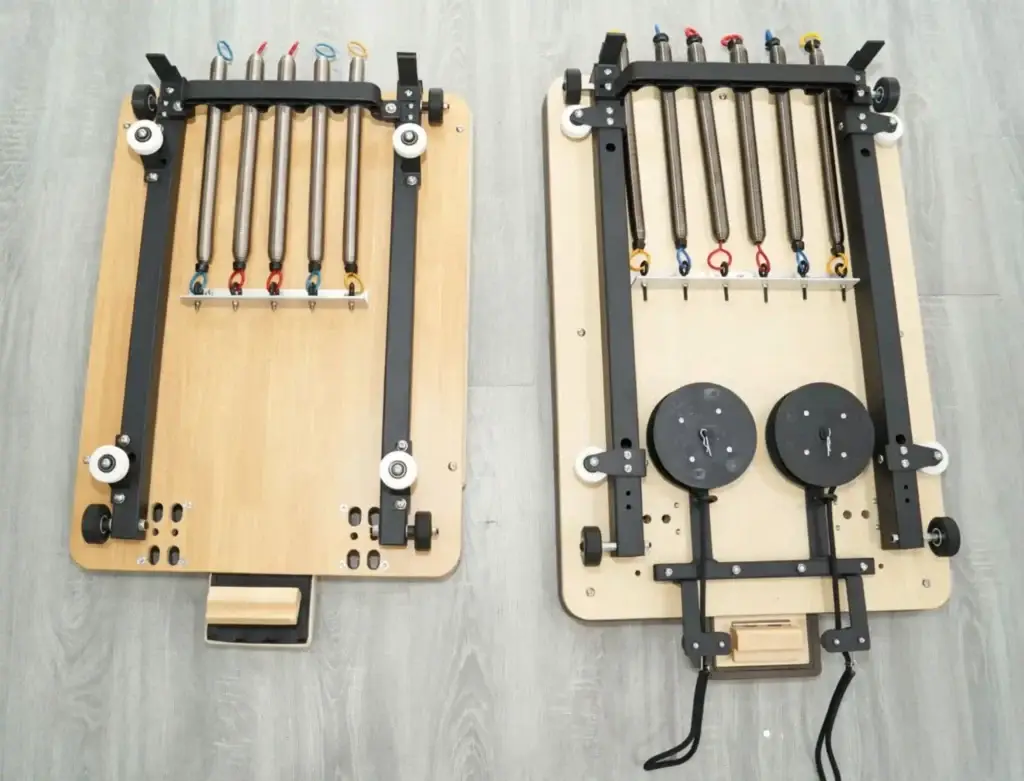
Most Reformers use several springs with different resistance levels.
But five springs on one machine won’t necessarily feel the same as five springs on another.
Here’s what I’d ask the supplier to confirm:
| Spring specification | What to check |
| Wire material | Steel grade and material standard |
| Wire diameter | Nominal diameter and tolerance |
| Resistance | Measured force at specified extensions |
| Consistency | Permitted variation within the same resistance level |
And what about those “German springs” or “Korean spring wires” you sometimes see advertised?
I’d ask for documentation supporting the claimed origin.
A country-of-origin certificate may help establish where the goods came from, but it doesn’t tell you how the springs will perform.
3. How to Evaluate Manufacturing Equipment and Assembly Quality
A Pilates reformer machine includes rails, wheels, springs, a footbar, ropes, and several moving or locking components. Small manufacturing errors can affect how those parts work together.
Check the Manufacturing Equipment
I’d start by asking whether the factory has equipment suitable for the products it makes.
That might include CNC machining centers, aluminum cutting machines, drilling fixtures, and assembly jigs.
If some processes are outsourced, ask how the factory checks the work completed by its subcontractors.
There’s nothing inherently wrong with outsourcing. What matters is inspection.
Ask About Dimensional Tolerances
For a Pilates Reformer, these are some of the areas worth checking:
| Component | Critical inspection points |
| Rails | Straightness and parallelism |
| Carriage | Running clearance and alignment |
| Wheels | Dimensions and mounting positions |
| Footbar | Adjustment-hole alignment and locking |
| Frame | Connection points and assembly dimensions |
| Tower, if included | Mounting alignment and structural connections |
Ask the manufacturer for drawings showing the critical dimensions and acceptable tolerances.
Ask Workshop Records
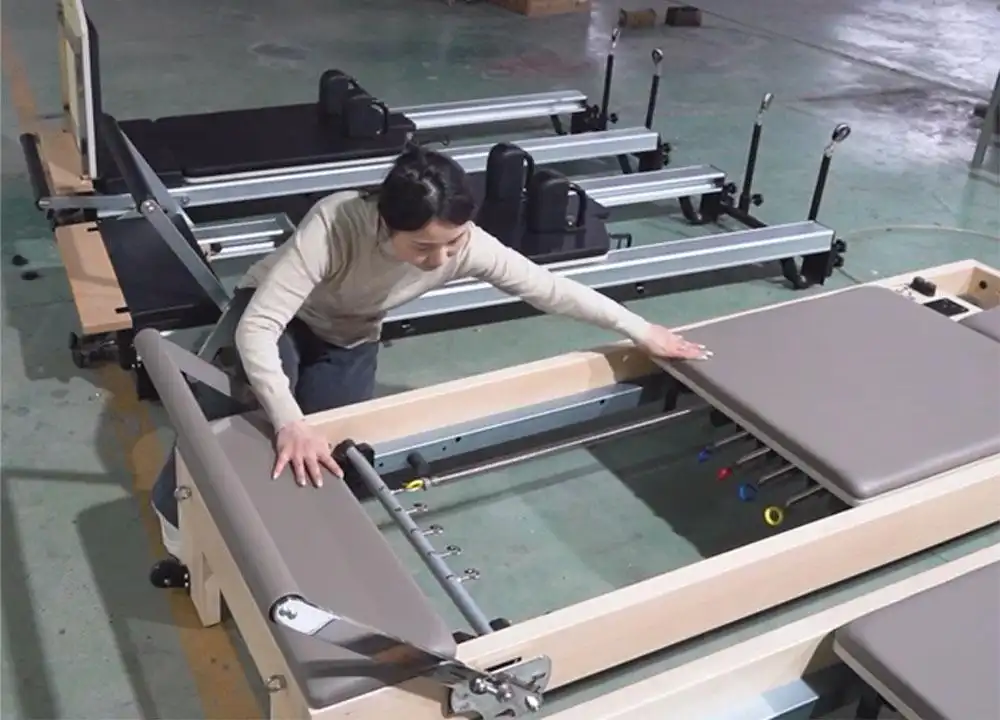
I’d also ask for completed Pilates equipment production records. Actual records from previous production runs.
For example: include incoming material inspections, first-piece inspection reports, assembly instructions, and critical fastener checks.
These records help you see whether quality control is part of everyday production.
4. Check What the Warranty Actually Covers
Don’t be ignored by the warranty words on the merchant. Verify with the merchant again whether the warranty here is for the entire Pilates reformer or for the parts.
At Warrior Pilates, the stated warranty periods are:
| Component | Warrior Pilates warranty |
| Frame | 10 years |
| Springs | 2 years |
| Wheels | 2 years, regardless of equipment model |
| Upholstery and padding | Depends on the selected material and manufacturing process |
Before ordering, ask for the written warranty policy, including coverage conditions, exclusions, and the claims procedure.
It’s also worth confirming whether replacement parts, shipping costs.
5. How to Request and Approve a Pilates Reformer Sample
If you’re planning a bulk order, I’d recommend purchasing a sample first.
A catalog photograph can show you what the equipment looks like.
It can’t tell you how the carriage moves.
What Should You Confirm Before Ordering a Sample?
Start with the model, frame material, dimensions, spring configuration, footbar, carriage, upholstery, accessories, and packaging.
Then confirm the sample price, preparation time, and shipping cost.
You can also ask whether the sample fee will be credited against a future bulk order or whether the supplier offers special sample pricing.
Once the sample arrives, inspect it against the agreed specifications.
I’d suggest recording the results in a simple approval form:
| Item | What to confirm |
| Frame | Material, dimensions, color, finish |
| Carriage | Smooth movement and alignment |
| Springs | Quantity, resistance, attachment |
| Footbar | Adjustment and locking |
| Upholstery | Color, stitching, padding |
| OEM branding | Logo size, position, color |
| Accessories | Quantity and compatibility |
| Packaging | Protection and completeness |


6. How to Compare Quotations, MOQ, and Bulk Prices
Let’s say Factory A quotes $500 for a Reformer, while Factory B quotes $600.
Which one would you choose?
The $600 option is tempting, obviously.
But before deciding, I’d want to know whether both prices include the same frame material, spring system, accessories, packaging, and customization.
Otherwise, you’re not really comparing the same product.
What Should a Pilates Reformer Quotation Include?
| Quotation item | Details to confirm |
| Base equipment | Reformer model, materials, standard configuration |
| Optional accessories | Tower, jumpboard, box, color, material and size. |
| OEM customization | Logo position, frame color, soft package material and color, frame surface treatment |
| Packaging | When shipping cartons, wooden crates, pallets and protective materials, please promptly share the shipping pictures and videos with the customers |
| Samples and tooling | Sample fees, special tooling or mold costs |
| Spare parts | Springs, wheels, ropes, and other components |
| Inspection | Additional testing or third-party inspection |
| Shipping | Inland transport, international freight, insurance |
| Trade terms | EXW, FOB, FCA, or other agreed terms |
7. What Should You Confirm Before Signing a Purchase Contract?
You’ve inspected the factory, checked the materials, approved the sample, and agreed on a price.
Almost there.
Before pay the deposit, however, I’d make sure the contract covers the details that matter when things don’t go exactly as planned.
Product specifications: Include the model, technical specification, drawing revisions, and approved sample record.
Payment terms: State the deposit, balance payment, and conditions for each payment.
Production and delivery: Define when production begins and when the goods must be ready.
OEM customization: Require written approval before changing agreed materials, components, or designs.
Warranty and after-sales service: Confirm coverage, replacement-parts support, and responsibility for related costs.
Conclusion
Finding a reliable Pilates reformer manufacturer isn’t about choosing the company with the good looking website or the lowest reformer price.
I’d approach it in seven steps: verify the business, inspect the factory, check the materials, review manufacturing processes, approve a sample, compare quotations, and check contract.
For Pilates studios, rehabilitation centers, distributors, and private-label brands, that evidence is worth far more than another promise of “excellent quality.”
And if you’re currently looking for a Pilates reformer manufacturer in China, you’re welcome to contact Warrior Pilates.
Tell us which models you’re interested in, how many units you need, and what materials or OEM options you have in mind.
We’ll be happy to discuss the available configurations, samples, and quotation for your project.