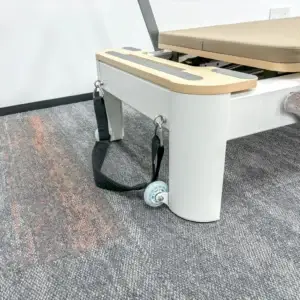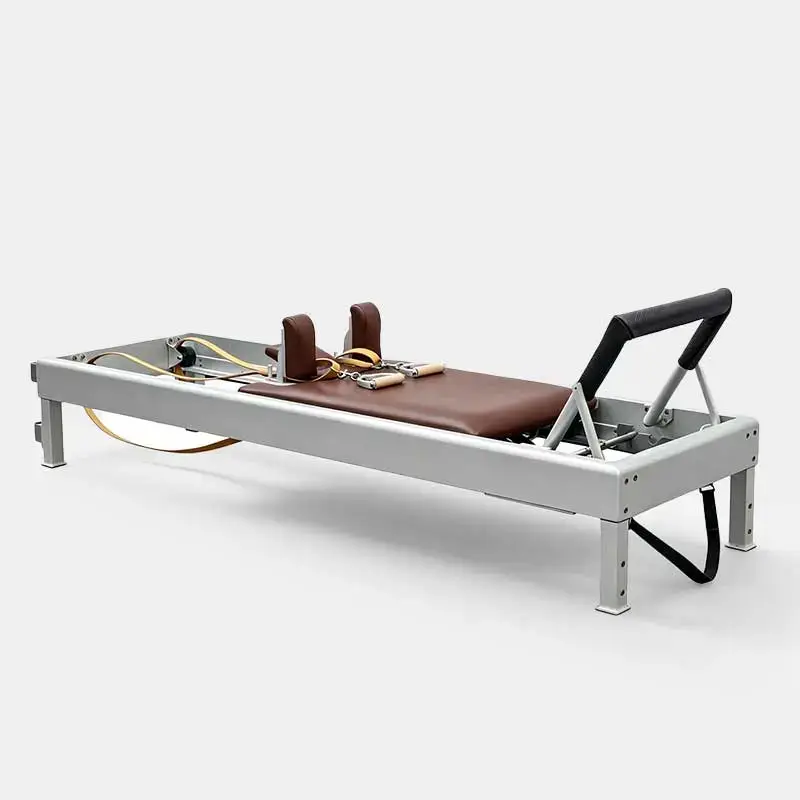
I have spent more than 6 years working with Pilates equipment factories, studio owners, buyers. Hundreds of reformers that looked beautiful in photos but not work after a few years of everyday use. However, the maple wood Pilates reformers also keep good performance in a busy studios for more than ten years.
Many studio owners ask me the same question. Why do so many brands still use maple wood? They also ask me how to judge the quality of a wooden Pilates reformer before they spend thousands of dollars on equipment.
This guide shares what I have learned from designing, manufacturing, and inspecting commercial Pilates reformers for studios around the world. Hope you can learn somthing from this guide.
Table of contents
- Why Is Maple Wood Used for Commercial Pilates Reformer Frames?
- Maple Wood Pilates Reformer Frame: What Determines Long-Term Stability?
- Solid Maple vs Plywood Pilates Reformer Frames: What Should Buyers Check?
- How Wood Moisture Control Affects a Maple Pilates Reformer Frame
- Why Global Studios Face Additional Challenges
- How Surface Finishing Protects Maple Wood Pilates Reformer
- Maple Wood Reformer Load-Bearing Structure: What Studio Owners Should Inspect?
- Maple Wood Reformer vs Rubber Wood Reformer vs Aluminium Alloy Reformer vs Walnut Wood Reformer: Material Comparison for Buyers
- How to Customize a Maple Wood Pilates Reformer for Your Brand
- How to Choose a Maple Wood Pilates Reformer Manufacturer in China
- Conclusion
- References
Why Is Maple Wood Used for Commercial Pilates Reformer Frames?
Maple has a hardness of 6450N.( SITE: Forest Products Laboratory. (2021). Wood Handbook: Wood as an Engineering Material. USDA Forest Service.)
Look at NBA basketball courts. Twenty-nine of the league’s thirty teams use maple flooring. This choice is not about appearance. A professional court floor cannot be too slippery or too sticky, because either condition increases player risk of injury. It must absorb impact to reduce stress on athletes’ knees, remain dimensionally stable under heavy loads(like O’Neal’s same weight ), and resist over 10 years wear from constant use(NBA courts floor are replaced every 10 years.) [Source: https://armorcourts.com/what-is-the-most-common-flooring-material-used-for-a-basketball-court/]
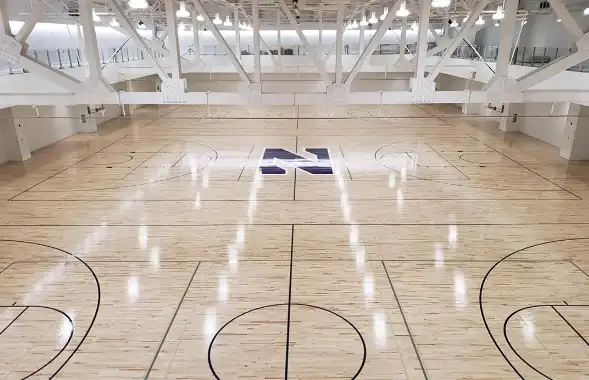
A professional Pilates reformer has very similar requirements. Studio equipments must stay stable during movement, cushion repeated loading, withstand thousands of classes, and maintain its appearance over many years. For studio owners, maple wood solves practical business problems: it improves user comfort, reduces maintenance costs, and provides the long-term durability needed for a growing Pilates studio.
Why Do Premium Pilates Brands Prefer Maple?
I have visited factories and studios in Europe, and Australia. I often notice that premium Pilates brands use maple frames even though other woods cost less.
strength
Pilates reformer must carry different users every day. Some studios run 5 or more classes daily. The frame experiences repeated loading, movement, and vibration. Maple can tolerate these conditions better than many softer woods.
hardness
Maple has good resistance to dents and scratches. Studio equipment receives constant contact from shoes, rings, watches, and cleaning tools. A harder wood surface stays attractive for a longer time.
stability
Maple has relatively low movement after proper drying and processing. This stability helps maintain rail alignment and carriage performance.
patterns
Maple wood features not only straight grain, mountain-shaped grain, teardrop grain, and wavy grain, but also some unique patterns, such as stain patterns, bird’s-eye patterns, ripple patterns, and flaky patterns. When you see so many patterns of maple wood, you can’t help but marvel at nature’s artistry.
A Story From My Personal Experience
Over the years, I have seen studio owners replace a cheap Pilates reformer after only three years. The wood had started to crack, the frame no longer felt solid, and the rails had gradually fallen out of alignment.
At the same time, I have inspected maple reformers that were still keekp good working, after more than ten years of daily train use. They were not perfect, but they remained stable, quiet work.
In most cases, it came down to material selection and manufacturing method.
I always remind studio owners that a reformer is not just another piece of studio furniture.
When one reformer stop service, classes may need to be rearranged. Clients become frustrated, schedules are disrupted, and lost sessions can quickly turn into lost revenue.
That is why I encourage buyers to think beyond the initial purchase price. A cheaper Pilates reformer may save money on the day it arrives, but it can become far more expensive if repairs, downtime, or early replacement enter the equation.
Maple Wood Pilates Reformer Frame: What Determines Long-Term Stability?
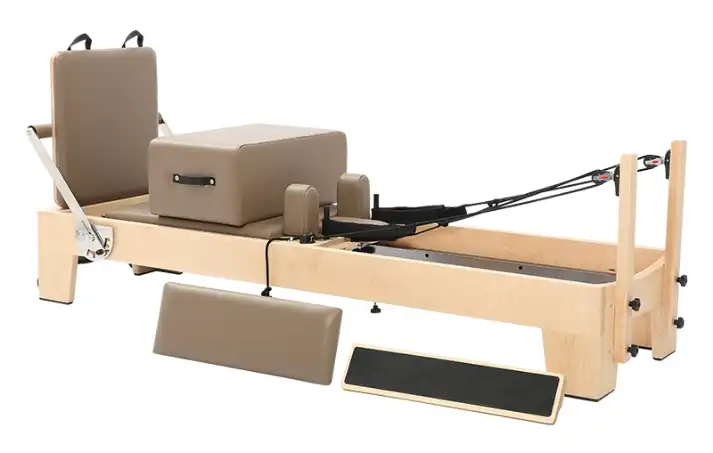
Because wood grows in cold regions, it can only grow a little bit each year, and the growth rings have relatively small tube holes. For maple wood, the volumetric shrinkage from green to oven-dry is commonly around 10% to 12%, with most general wood references putting maple in the broader 9% to 15% range for wood species overall.
| Volumetric Shrinkage Comparison of Common Woods Used for Pilates Reformer Frames | |||
| Wood Species | Volumetric Shrinkage (Green to Oven-Dry) | Dimensional Stability | Implications for Pilates Reformer Frames |
| Hard Maple (Canadian Maple) | 10%–12% (general range: 9%–15%)[Source] | Good | Provides a balance of hardness and stability. Less prone to significant movement when properly kiln-dried, helping maintain frame alignment and long-term structural integrity. |
| Rubberwood | 8.0%–8.5%[Source] | Very Good | Lower shrinkage means good dimensional stability, but the wood is |
| Black Walnut | 13%–14%[Source] | Moderate | More dimensional movement than maple. Attractive appearance but may require tighter moisture control and more careful manufacturing to prevent warping or joint movement over time. |
| Beech | 15%–17%[Source] | Fair | High shrinkage results in greater expansion and contraction with humidity changes. Without strict moisture management, beech frames are more likely to develop movement, loosening, or alignment issues over years of commercial operation. |
I often hear studio owners say that all wooden reformers look similar.
I disagree.
I have learned that long-term stability depends on many hidden engineering details that most buyers never see in product photos.
The long-term stability of a maple Pilates reformer depends on wood quality, volumetric shrinkage, frame structure,spring quality, drying processes, hardware quality, and manufacturing precision.
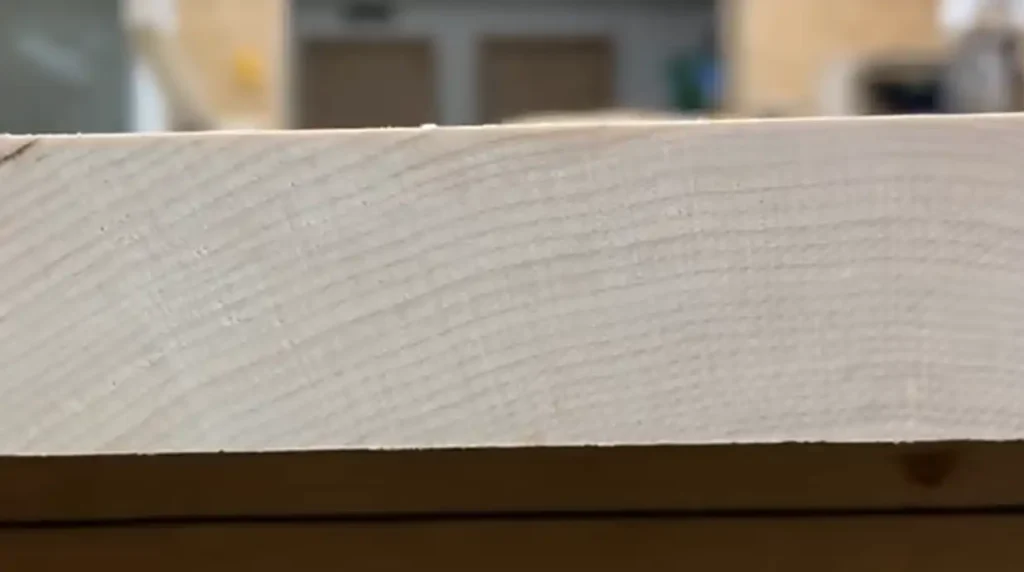
Why Manufacturing Precision Matters
A small error can create noticeable problems.
For example:
A slightly twisted rail can create resistance during carriage movement.
A poorly aligned frame can cause uneven wheel wear.
A loose connection can create vibrations.
These problems often appear gradually. They may not be visible during the first few months.
Once has problems, at the very least, the training effect of the user during use will be poor; at the worst, it may cause damage to the body.
A reformer that requires repeated repairs creates hidden costs:
- Technician visits
- Replacement parts
- Class interruptions
- Instructor complaints
- Negative client experiences
I encourage studio owners to ask manufacturers difficult questions.
A professional manufacturer should answer these questions clearly.
A not clear answer often tells me more than a detailed one.
Solid Maple vs Plywood Pilates Reformer Frames: What Should Buyers Check?
What Is Plywood?
Maple plywood was developed in North America as a practical way to use maple offcuts and veneer that would otherwise go to waste. By bonding these layers together, manufacturers can reduce material waste, improve sustainability, and lower production costs. From another side, maple plywood appearance is novel and good-looking.
What Is Solid Maple?
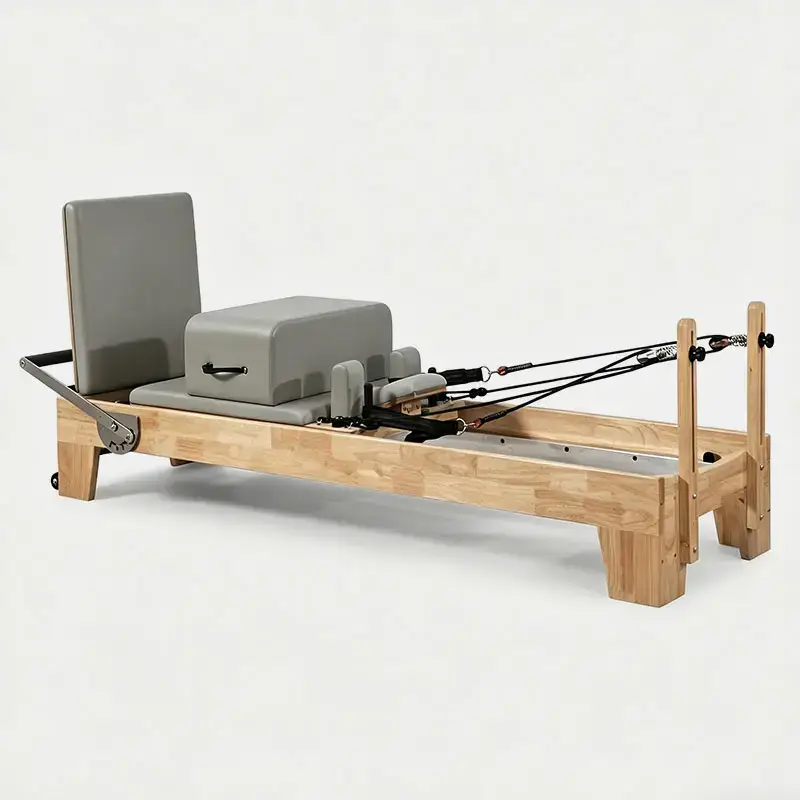
A solid maple frame uses pieces of natural maple wood throughout the structural components.
Many premium reformers use solid maple.
I often receive questions from studio owners.
Should I buy a solid maple reformer or a plywood reformer?
There is no single answer.
The correct answer depends on your business goals, budget, and expected usage.
Solid maple offers a premium appearance and strong structural performance. Plywood offers cost advantages and good dimensional stability. Studio owners should evaluate durability, appearance, maintenance, and brand positioning before choosing either option.
Industry Insight From Manufacturing Projects
Over the years, I have seen high-quality plywood reformers perform well. I have also seen maple reformers disappoint buyers because of poor manufacturing.
Some suppliers advertise “solid maple” while using lower-grade wood in hidden structural areas. Others use a thin maple veneer and market the product as a maple reformer.
For that reason, I always recommend asking for material specifications and production photos. Suppliers who are transparent about their materials and processes are usually easier to trust.
The right reformer is the one that fits your studio, performs reliably, and continues to do its job year after year.
How Wood Moisture Control Affects a Maple Pilates Reformer Frame
I consider moisture control one of the most important and least understood parts of manufacturing a maple wood Pilates reformer.
Most studio owners never ask about it.
Improper moisture control can cause deformation, cracking, loose joints, rail misalignment, and reduced equipment life. Buyers should always ask manufacturers about wood drying and moisture testing procedures. (参考文献Glass, S. V., & Zelinka, S. L. (2010). Moisture Relations and Physical Properties of Wood. USDA Forest Products Laboratory.)
Why Global Studios Face Additional Challenges
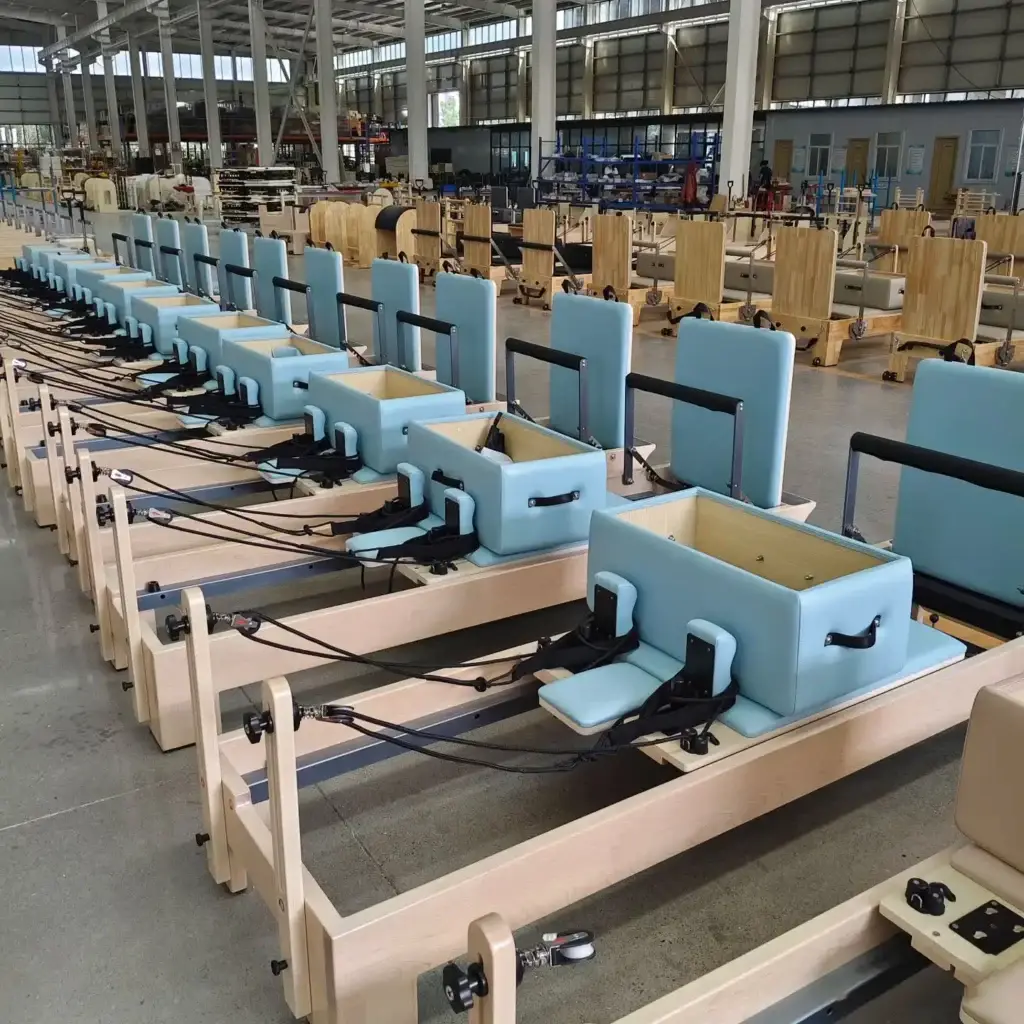
Studios often buy reformers from one climate and use them in another. A reformer made in a humid region may end up in a dry studio, while one built in a dry climate may be shipped to a tropical market.
Wood responds to these changes.
I have seen reformers develop cracks within their first year, even though they looked perfect when they left the factory. In many cases, moisture control was the real issue.
That is why I always recommend asking about drying processes, moisture content, and testing methods.
Experienced manufacturers treat wood as an engineering material. That difference often determines how a reformer performs years down the road.
How Surface Finishing Protects Maple Wood Pilates Reformer
I often notice that the first signs of equipment aging do not appear inside the frame. They appear on the surface.
The finish begins to wear.
The wood loses shine.
Small scratches become visible.
Sweat and cleaning chemicals slowly damage the coating.
Surface finishing protects a maple wood Pilates reformer from moisture, sweat, cleaning chemicals, scratches, and daily wear. A high-quality finish helps maintain appearance, extends service life, and reduces maintenance costs in commercial studios.

Why Surface Protection Matters in Studios
The maple Pilates reformer in a home environment may be used once a day.
But,if a Pilates reformer in a busy studio may be used ten times or more every day.
Students touch the footbar, frame, and carriage with hands that contain sweat, body oil, lotion, and cleaning products. Studio staff clean Pilates reformers repeatedly.
Over time, these conditions become harsh.
Without proper finishing, wood can absorb moisture and become damaged.
Maple Wood Reformer Load-Bearing Structure: What Studio Owners Should Inspect?
Maple wood is not used in commercial reformers simply because it looks beautiful. According to the USDA Wood Handbook, hard maple has a density of about 705 kg/m³, a modulus of elasticity of approximately 12.6 GPa, a bending strength of around 109 MPa, and a compression strength of about 54 MPa (Ross, 2021). These properties allow the frame to remain stiff under spring tension and repeated dynamic loading while resisting long-term deformation. I pay particular attention to these values because a Pilates reformer may experience thousands of loading cycles every year. The combination of high strength and a favorable strength-to-weight ratio makes maple an excellent material for load-bearing Pilates reformer structures.
[Data Source:Ross, R. J. (Ed.). Wood Handbook: Mechanical Properties of Wood. USDA Forest Products Laboratory.]
A Reformer Carries More Than Body Weight
When people ask about load capacity, they are usually thinking about one thing: body weight.
But that is only part of the story.
A reformer is not supporting a person who stands still. Every class creates movement. The carriage accelerates and stops. Springs resistance. Clients shift their weight from one side to the other. Some movements place more force on one corner of the frame than the other.
None of these forces seem dramatic on their own.
The challenge is repetition.
A good maple wood Pilates reformer may go through thousands of movement cycles every month. Over time, small forces become a serious test for the maple wood frame, joints, fasteners, and materials.
Maple Wood Reformer vs Rubber Wood Reformer vs Aluminium Alloy Reformer vs Walnut Wood Reformer: Material Comparison for Buyers
Today the most 4 common options on the market are maple wood, rubber wood, aluminium alloy, and walnut wood. Each material serves a different purpose and fits a different type of studio.
Maple wood offers an excellent balance of strength, appearance, and durability for studios. Rubber wood is more economical. Aluminum alloy provides modern sense and moisture resistance. Walnut delivers a luxury appearance but at higher costs.
Maple Wood
Pilates reformers has traditionally been built from solid wood since its earliest days.
Maple wood became the preferred material because of its stable performance and excellent workability. Joseph Pilates himself used maple wood in his equipment designs, and many leading Pilates brands continue to use it today. As a result, maple has become the industry standard for professional-grade Pilates equipment.
Maple wood offers excellent durability and appearance that aligns well with the positioning of high-end Pilates equipment.
Maple also features a fine and smooth grain pattern. When users touch the frame, it does not feel cold like metal. It also reduces discomfort caused by skin contact during training.
In addition, maple wood provides better natural grip than metal surfaces, helping users feel more stable and confident during exercises.
Rubber Wood
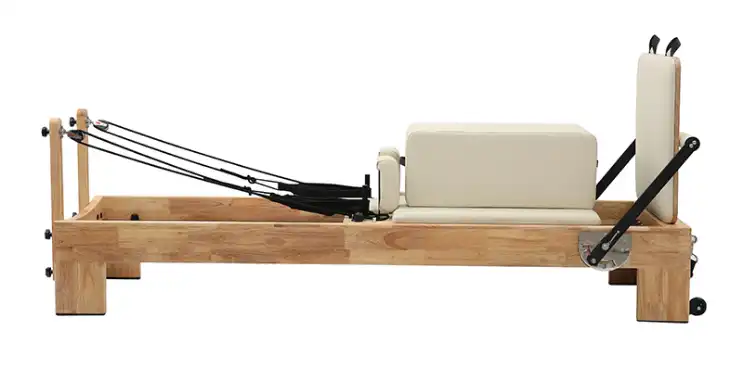
Rubber wood is a by-product of rubber trees after their latex-producing life cycle ends. Because of its abundant supply, it is widely used in cost-sensitive Pilates reformers buyers.
For home users and entry-level studios, rubber wood can reduce material costs and make Pilates equipment more affordable.
On average, a rubber wood reformer costs approximately USD 100–150 less than a comparable maple wood reformer.
Rubber wood usually shows more visible finger-jointed or laminated grain patterns. Compared with maple wood, rubber wood reformer frames generally have a darker appearance.
At Warrior Pilates, we use higher-grade rubber wood materials to improve durability and stability. This allows the reformer to withstand intensive daily training while maintaining strong load-bearing performance and a long service life.
Through precision machining and structural optimization, the performance of our rubber wood reformers can approach that of maple wood models.
The frame can also be finished in custom colors, including pure white and other studio-specific designs.
Aluminium Alloy
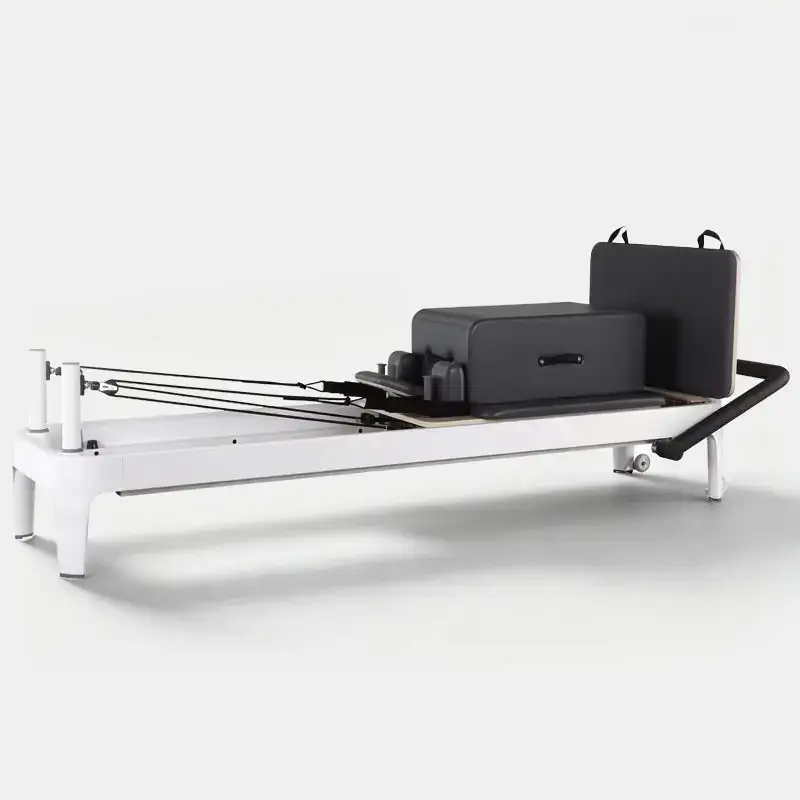
Aluminium alloy offers strength that is close to steel while weighing only about one-third as much as steel and approximately 60% of the weight of a maple wood frame.
This combination provides excellent structural rigidity. The frame can withstand spring tension and dynamic body loads with minimal deformation, helping maintain long-term rail accuracy and smooth carriage movement.
At the same time, the lighter frame weight makes transportation, installation, and studio layout adjustments easier.
Aluminium alloy frames also provide a clean and modern appearance.
Anodized matte silver or black finishes create a premium look that works well in minimalist and industrial-style studios.
At the same time, aluminium frames can blend naturally with wood, natural materials, and wabi-sabi-inspired interiors, giving studio owners more design flexibility than traditional wooden equipment.
Walnut Wood
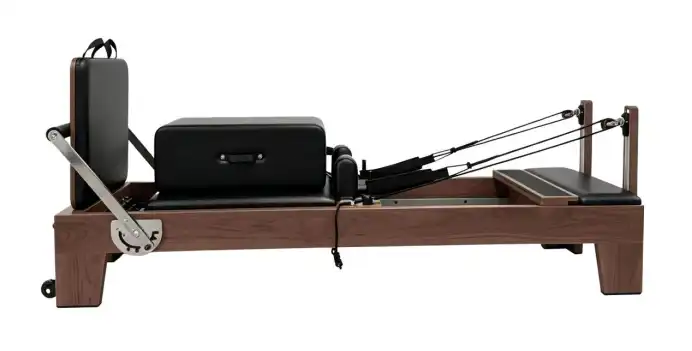
Walnut is considered a premium hardwood and carries a significantly higher material cost.
For this reason, walnut reformers are commonly positioned as upgraded or luxury models within a product range.
Many manufacturers use walnut models to differentiate themselves from standard maple or rubber wood equipment while increasing product value and brand prestige.
The rich, dark grain pattern creates a sophisticated appearance that is especially attractive in boutique studios, luxury wellness centers, and premium fitness spaces.
For studio owners who place a strong emphasis on interior design and brand image, walnut can become both a training tool and a statement piece.
How to Customize a Maple Wood Pilates Reformer for Your Brand
Customizing a maple wood Pilates reformer allows studio owners to strengthen brand identity, improve your client experience, and create visual differentiation through colors, materials, logos, and functional options. I will introduce maple wood Pilates reformer can be customized in four main areas: materials, functions, branding, and the OEM development process.
Uphlostery Material Customization
Genuine Leather: Naturally irregular pores, quick rebound, and no harsh odor.
Synthetic Leather: Microfiber leather is preferred (durable and wear-resistant).
PU leather is soft but has a plastic-like feel.
PVC leather is stiff and not recommended (short lifespan).
Functional Customization
Different studios train different, so functional requirements often vary.
Common options include auto rope adjustment systems, adjustable footbars, footbar shape, different leg heights, custom frame lengths, and removable or adjustable shoulder rests. Accessories such as jump boards, boxes, and platform extenders can also be added to expand exercise options.
The goal is simple: build a reformer that works for your instructors and clients.
Brand Customization
Many studios and distributors want equipment that reflects their own identity.
Custom logos can be added to the frame or upholstery Colors, logo, and packaging can also be customized to create a more consistent brand experience.
OEM Development Process
The process typically includes requirement discussions, design drawings, sample prototyping, specification confirmation, mass production, quality inspection, and final shipping.
A good OEM partner does more than manufacture equipment. They help turn your ideas into a real Pilates reformer.
How to Choose a Maple Wood Pilates Reformer Manufacturer in China
Studio owners should evaluate manufacturing experience, material transparency, quality control, communication, customization capability, and long-term support when choosing a maple wood Pilates reformer manufacturer in China.
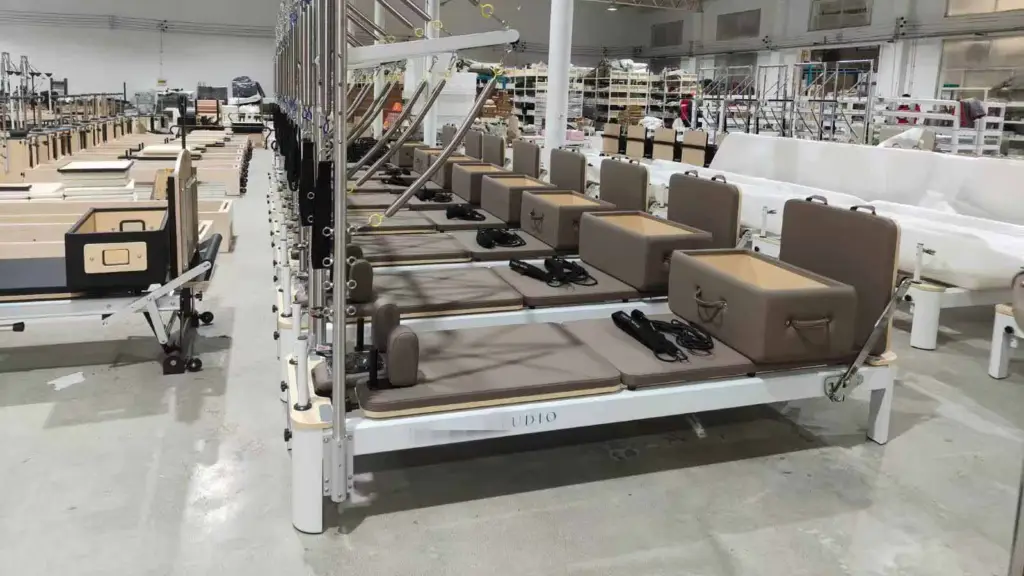
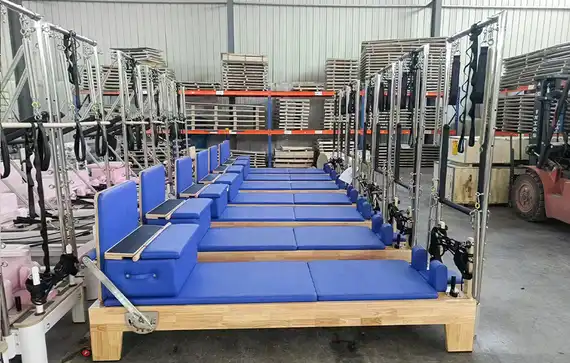
Price matters, but it is rarely the most important factor.
The best manufacturers are usually the ones that communicate honestly, maintain consistent quality, and stand behind their products when problems occur.
Ask for Processing
I encourage studio owners to request:
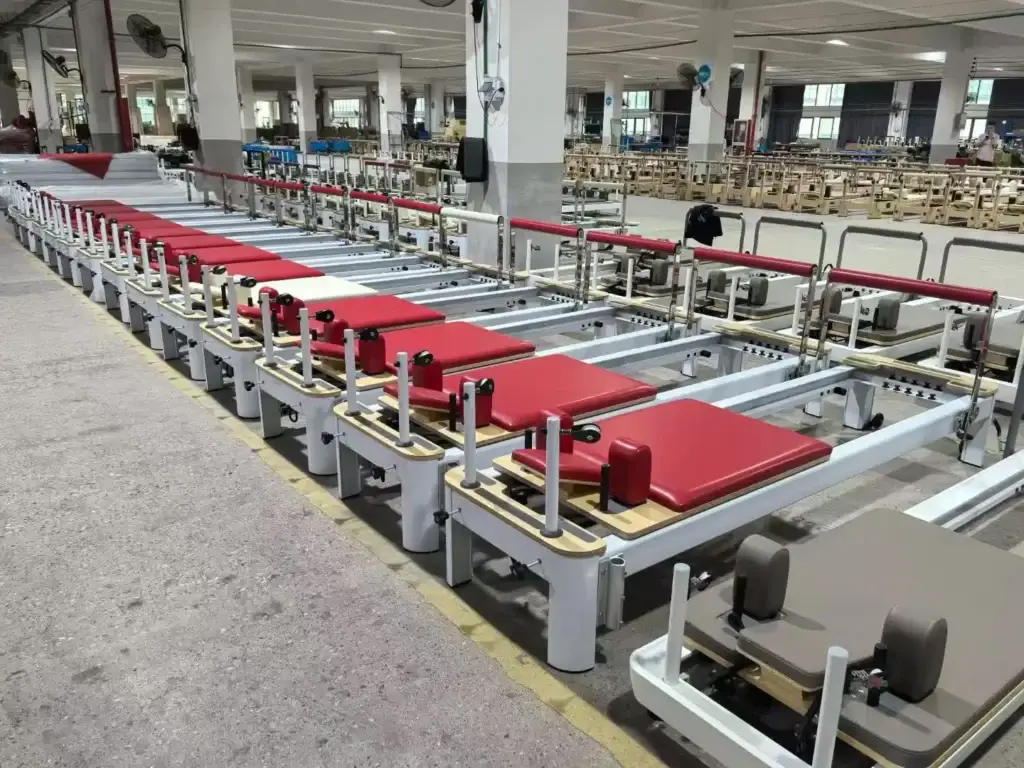
- Factory photos
- Production videos
- Material specifications
- Inspection procedures
- Packaging methods
- Customer references
Professional manufacturers usually share information openly.
Conclusion
I have worked with maple wood Pilates reformers for many years. I still believe maple remains one of the best materials for commercial studios because it combines strength, stability, durability, and premium appearance.
The real difference often comes from factors that buyers cannot see immediately: Moisture control, surface finishing, hardware quality, spring quality, manufacturing precision, quality inspections, customization capability
Ok, that it is.
If you have any others question, pls contact us directly. If you have any questions about the Pilates equipment or customized quotations, please contact sales engineer directly.Email: alexliu@wuxipilates.com
References
- Forest Products Laboratory. Wood Handbook: Wood as an Engineering Material. United States Department of Agriculture, Forest Service.
- Glass, S. V., and Zelinka, S. L. Moisture Relations and Physical Properties of Wood. USDA Forest Products Laboratory.
- Ross, R. J. Wood Handbook: Mechanical Properties of Wood. USDA Forest Products Laboratory.
- What Is The Most Common Flooring Material Used For A Basketball Court?
- https://www.bois-exotique.com/wp-content/uploads/2023/04/The-Shrinking-and-Swelling-of-Wood.pdf
- https://doaj.org/article/4a95e75a944845f08d0ea1e0fb6fb7a8
- https://www.osbornewood.com/blog/gallery/wood-species-in-detail-european-beech
- https://woodbin.com/ref/wood-shrinkage-table/