I have worked with Pilates reformers for more than 6 years. During that time, I have visited factories, inspected production lines, and talked with studio owners around the world. One question appears again and again.
Should I choose a maple wood Pilates reformer or an aluminium Pilates reformer?
Many buyers think the answer is simple. They believe wood is traditional and aluminium is modern. I do not think that tells the whole story.
From my experience, Pilates equipment frame material is only one part of the decision. The real difference comes from how the frame is designed, how it is manufactured, and how it performs after years of commercial use.
For a professional studio owner, this is not only a material choice. It is a business decision. The right reformer should support thousands of training sessions, reduce maintenance, protect clients, and match the image of the studio.
In this guide, I will compare maple wood and aluminium reformers from an engineering and commercial point of view. I will explain what I inspect during factory visits, what procurement teams usually ask, and what I believe every studio owner should know before investing in commercial Pilates equipment.
Maple wood and aluminium Pilates reformers each offer unique advantages for commercial studios. Maple provides a premium feel, natural stability, and timeless aesthetics, while aluminium offers lightweight strength, corrosion resistance, and modern design. This guide compares structural performance, carriage smoothness, durability, maintenance, customization, and long-term value to help studio owners choose the right commercial reformer.
Choosing between maple wood and aluminium is not about deciding which material is “better.” It is about understanding which material better supports your studio’s business model.
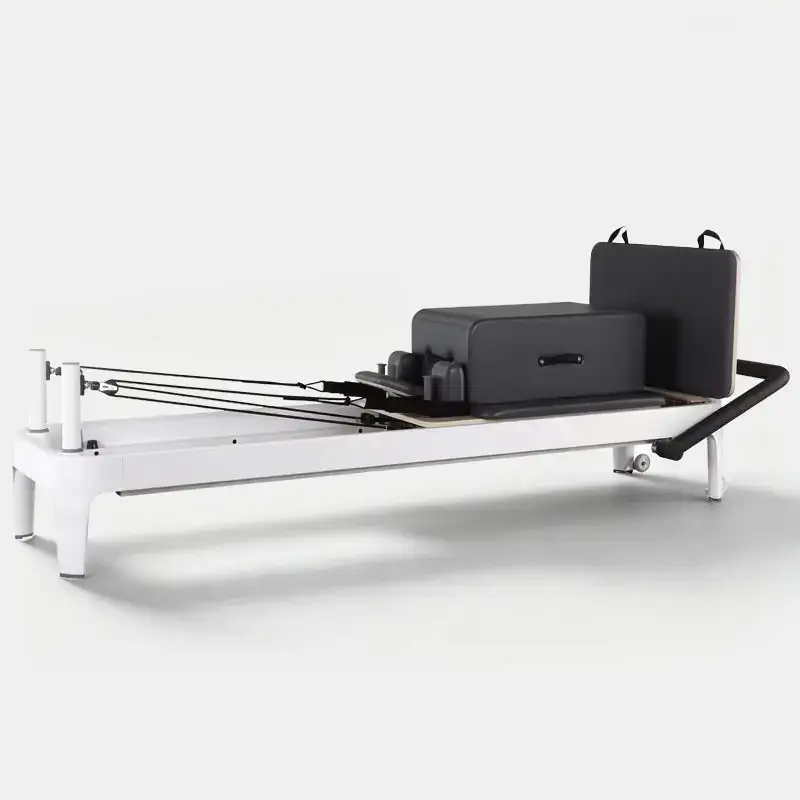
Table of contents
- Maple Wood vs Aluminium Pilates Reformer Frames: What Are Key Structural Differences?
- Does a Maple Wood Pilates Reformer Warp Over Time? What Buyers Should Check
- How Alloy Aluminium Profile Thickness Affects Commercial Reformer Strength
- Does Frame Material Affect the Smoothness of a Pilates Reformer Carriage?
- Wood vs Aluminium Reformer: Which Produces Less Noise in a Studio?
- Maple Wood or Alloy Aluminium Reformer: Which Better Fits a Premium Pilates Studio?
- Alloy Aluminium vs Wooden Reformers for Large Pilates Chains: What Procurement Teams Consider
- Which Reformer Material Offers Better Long-Term Value for Studios?
- What Can Be Customized on Maple Wood and Aluminium Reformers?
- Conclusion
- Reference
Maple Wood vs Aluminium Pilates Reformer Frames: What Are Key Structural Differences?
Many buyers compare wood and aluminium just by appearance.
Today I compare them by engineering.
The frame is the backbone of every Pilates reformer. It supports the carriage, absorbs spring forces, maintains rail alignment, and how the Pilates reformer performs after thousands of training sessions.
A studio owner may never see the inside of the frame. Yet the frame will determines how the reformer performs after years of daily classes.
The biggest structural difference between maple wood and aluminium Pilates reformers is not only material. Buyers should evaluate frame geo geometry and rigidity, joint construction, fasteners, carriage alignment, surface protection, testing data, and long-term maintenance before making a purchasing decision.
Which Reformer Frame Is More Stable: Maple Wood or Aluminium?
I often hear people say that aluminium is always stronger than wood.
That statement is too simple.
Strength and stability are not the same thing.
Hard maple has been used in professional Pilates equipment for decades because it provides excellent stiffness, dimensional stability, and vibration damping when properly dried and engineered. According to the USDA Wood Handbook, hard maple combines high density, high stiffness, and excellent mechanical performance for structural applications. (Forest Products Laboratory, 2021; Ross, 2021)
Aluminium alloy frame Pilates reformer offers a different advantage.
It delivers excellent structural rigidity while reducing overall machine weight. Properly designed aluminium profiles also resist humidity better than maple wood Pilates reformer.
Both materials can produce an extremely stable Pilates reformer.
Solid Maple Frame vs Aluminium Profile Frame: What Commercial Buyers Should Inspect
For maple reformers, I check whether the side rails and load-bearing members are made from thick, solid maple instead of hollow sections or poorly laminated pieces with visible gaps. Solid members resist bending more effectively and maintain structural integrity under repeated commercial use.
For aluminium reformers, I inspect the profile design instead of the material itself. A high-quality aluminium frame should use robust extruded profiles with sufficient wall thickness and internal reinforcement. Thin profiles may reduce manufacturing costs, but they also reduce stiffness and increase the risk of frame deflection during heavy daily use.
A Danish Studio Chose Aluminium for Its New Brand Launch
In January 2026, a studio owner from Denmark, Maria, contacted us-Warrior Pilates to purchase equipment for her new Pilates studio. Her initial inquiry focused on our white aluminium Pilates reformer with tower.
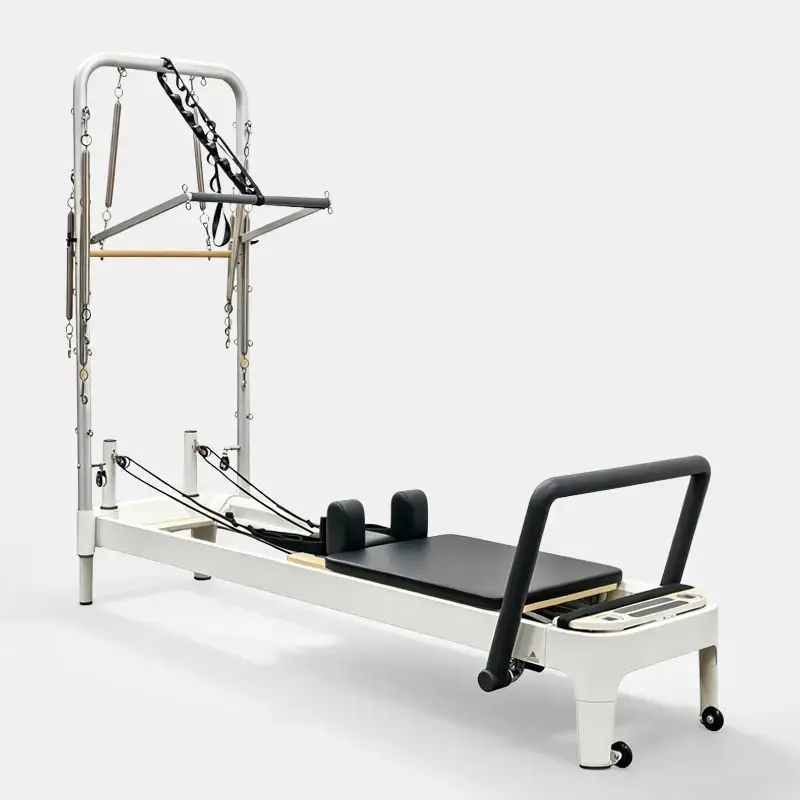
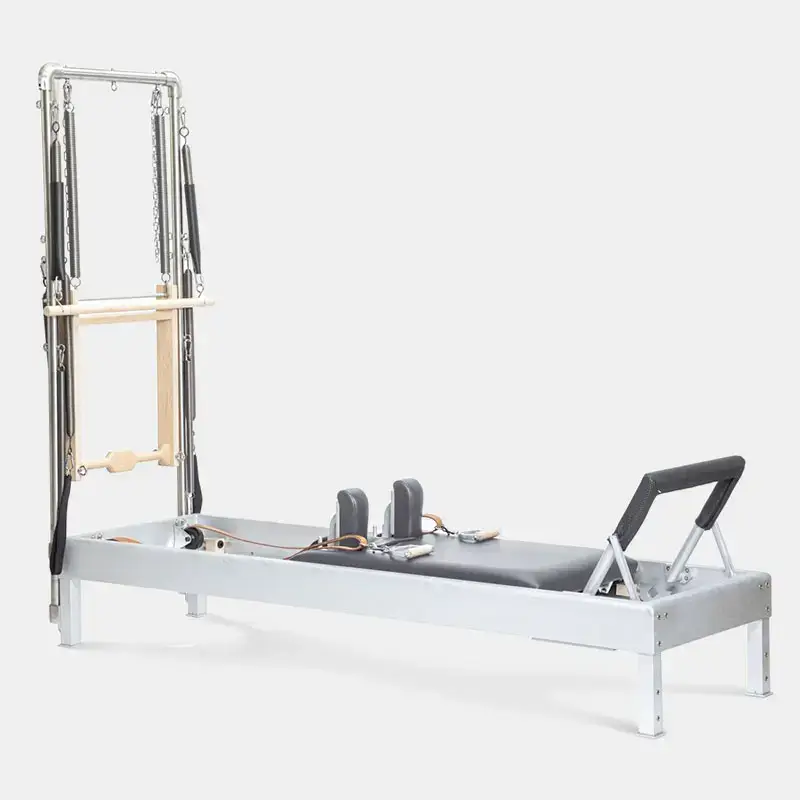
Our sales manager, Edward, responded quickly with detailed product information, customization options for upholstery colors, and logo placement on both the reformer frame and the Double Loop Straps. After several discussions, Maria ordered eight white aluminium reformers with towers.
However, what impressed me most was not the quantity of the order.
It was how she approached the entire project.
Instead of buying equipment one piece at a time, Maria planned the visual identity of her studio from the beginning. She selected a custom upholstery color, added her studio logo to every reformer, and even ordered a maple wood Pilates chair finished in the same upholstery to maintain a match training environment.
The project did not stop with Pilates equipment.
She also purchased approximately 500 pairs of custom Pilates grip socks with her studio logo. We packed the socks inside the reformer wooden crates, allowing her to reduce international shipping costs by utilizing the available space inside the export packaging.
Although Warrior Pilates offers door-to-door delivery throughout Europe, Maria preferred to work with her own freight forwarder. We coordinated production, completed all quality inspections, and delivered the entire shipment safely to the designated Chinese port according to her logistics plan.
Today, all of the equipment has been installed in her fancy new studio.
This project reminded me that professional buyers rarely evaluate a reformer only by its frame material.
They look at the complete business solution.
For Maria, aluminium was not simply a material choice. It matched the clean Scandinavian design style she wanted to create. At the same time, consistent upholstery colors, branded accessories, and optimized shipping helped build a stronger studio brand while improving purchasing efficiency.
That is why I often tell studio owners that choosing between maple wood and aluminium is only one part of the decision. The more important question is whether your supplier can support your brand, your logistics, and your long-term business plan—not just manufacture of Pilates reformer.
Does a Maple Wood Pilates Reformer Warp Over Time? What Buyers Should Check
One questions I hear from studio owners:
“Will a maple wood Pilates reformer warp after a few years?”
It is a reasonable concern.
Pilates reformer will operate every day. The carriage shift thousands of times every month. The springs apply repeated tension to the frame. If the frame changes shape, just a slight shape change, the carriage may no longer move smoothly, the rails may lose alignment, and maintenance costs increase is a tiny thing, the most important is trainer’s safe.
From my experience, however, most people are asking the wrong question.
The better question is not “Will maple warp?”
It is “How does the manufacturer prevent the maple from warping?”
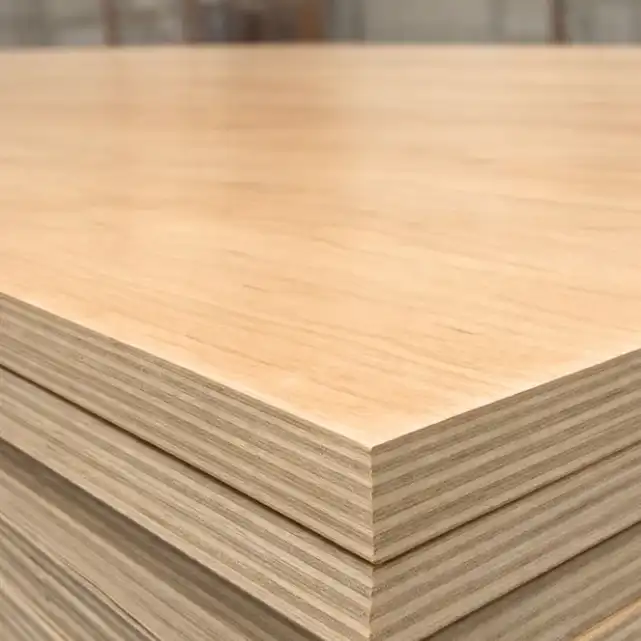
A high-quality maple Pilate reformer can maintain structural stability for many years. The most crucial factors are the of wood, humidity control, maple wood kiln drying, lamination quality,and whether the entire frame and hardware of the frame project are made of high-quality hard maple wood, rather than just whether the frame is made of maple wood.
Why Professional Manufacturers Choose Maple
Hard maple has remained the preferred material for commercial Pilates reformers for decades.
Professional manufacturers choose maple because it offers excellent dimensional stability, a dense and uniform grain structure, and reliable mechanical performance. When properly kiln-dried and processed, maple is less likely to develop long-term dimensional movement than many commonly used hardwoods. This is one reason why maple and oak continue to dominate the premium commercial Pilates equipment market. (Forest Products Laboratory, 2021)
Why Some Maple Reformers Warp
In my experience, warping is usually caused by manufacturing shortcuts rather than the maple itself.
The most common causes include:
| Risk Factor | How It Affects the Frame |
| Poor kiln drying | Wood continues shrinking after production |
| High humidity | Causes swelling and dimensional movement |
| Poor sealing | Moisture enters the wood more easily |
| Weak frame design | Concentrates stress in local areas |
This is why I never judge a reformer simply because the specification says “maple.”
Two manufacturers may both advertise maple frames. But from the long-term performance, they can be total different.
Good Engineering Prevents Warping
Choosing maple is only the first step.
A commercial reformer must also be engineered to distribute forces evenly throughout the frame.
Every movement creates tension from the springs, compression through the carriage, and additional loads from tower exercises and jumpboard training.
If these forces concentrate in one small area, the frame experiences unnecessary stress.
That is why high-end manufacturers pay close attention to:
- Frame thickness
- Structural bracing
- Joint design
- Load distribution
- Hardware positioning and material
Some manufacturers also use laminated or bonded maple structures that are specifically designed to improve dimensional stability in humid environments or coastal regions.
When these engineering principles are combined with proper moisture control, a commercial maple reformer can remain straight and stable for many years of professional use.
My Industry Experience
Several years ago, one studio owner asked me whether a maple reformer could survive in a humid coastal city-Daytona Beach, Florida, which city annual average humidity levels reaching over 73%.
Instead of recommending aluminium immediately, I first asked about the environment.
Would the studio use air conditioning throughout the year?
Would direct sunlight reach the reformers every afternoon?
How would the equipment be cleaned after classes?
Those questions mattered more than the material itself.
The project eventually used kiln-dried maple reformers, years later, the studio reported that the reformers remained straight, the carriage alignment work well, and routine maintenance was limited to normal inspections.
That experience reinforced something I have believed for many years.
Wood does not fail simply because it is wood.
Most structural problems begin long before the reformer reaches the studio.
They begin with material selection, moisture control, engineering design, and manufacturing discipline.
How Alloy Aluminium Profile Thickness Affects Commercial Reformer Strength
Many people believe every aluminium reformer is equally strong because aluminium is a metal.
I disagree.
The thickness and design of the aluminium profile play a much bigger role than many buyers realize.
Two aluminium reformers may look almost identical from the outside while having completely different structural performance.
Some people believe that all aluminium Pilates reformers are equally strong because they are made from metal.
I disagree.
When I inspect an aluminium reformer, the first thing I ask is not:
“What alloy do you use?”
I ask:
“How thick are your aluminium profiles, and why did you choose that thickness?”
The 6061-T6 aluminum alloy and 7075 aluminum alloy are basically used in the market
| Performance Property | 7075-T6 | 6061-T6 | Remarks |
|---|---|---|---|
| Tensile Strength | ≈570 MPa | ≈310 MPa | 7075-T6 is nearly twice as strong as 6061-T6. |
| Yield Strength | ≈500 MPa | ≈270 MPa | Indicates resistance to permanent deformation. |
| Brinell Hardness | ≈150 HB | ≈95 HB | 7075-T6 is significantly harder. |
| Elongation | ≈7.9–11% | ≈10–17% | Lower elongation means lower ductility; 6061-T6 is more ductile. |
| Density | ≈2.81 g/cm³ | ≈2.70 g/cm³ | 7075-T6 is slightly heavier. |
| Fatigue Strength | ≈160 MPa | ≈96 MPa | 7075-T6 performs better under repeated cyclic loads. |
| Shear Strength | ≈330 MPa | ≈210 MPa | 7075-T6 offers approximately 1.5 times the shear strength. |
| Thermal Conductivity | ≈130 W/m·K | ≈170 W/m·K | 6061-T6 provides better heat dissipation. |
From the products I have inspected, many Pilates equipment manufactuer will adopt alloy aluminium reformers use 6063-T5 aluminium extrusions with wall thicknesses ranging from approximately 2.0 mm to 2.5 mm.,6063-T5 General structural components: trucks, ships, building structures, etc
Some high end Pilates equipment will adopt 7075 alloy aluminium. This kind of material is sub-aerospace grade used by high-end manufacturers 7075alloy aluminium, Aerospace: Aircraft structural components (such as wings, fuselage frames, landing gear), robots or unmanned aerial vehicles that require lightweight and high-rigidity structural components, etc.
Higher-load areas often use thicker sections or additional reinforcement around the carriage rails, tower connections, and spring mounting points.
This approach creates a stronger frame without increasing the weight of every structural member.
Professional manufacturers adjust profile thickness according to where the loads are highest instead of making every section equally thick.
Aluminium profile thickness has a direct impact on the strength, rigidity, and long-term durability of a commercial Pilates reformer. Buyers should evaluate profile thickness together with profile geometry, alloy grade, joint construction, and machining quality instead of relying on material specifications alone.
Why Profile Thickness Matters
Every Pilates reformer will support trainer sit, stand, jump, and stretch while the springs apply repeated forces to the frame.
These forces create bending moments, twisting forces, and vibration throughout the aluminium structure.
A thicker alloy aluminium generally increases structural rigidity, this helps Pilates frame maintain its geometry after years of commercial use.
However, thicker does not always mean better.
Good engineering finds the right balance between strength, weight, manufacturing cost, and handling.
What Does Profile Thickness Change?
Increasing the wall thickness of an aluminium profile influences several important aspects of a reformer’s performance.
| Engineering Factor | Influence on Commercial Performance |
| Bending resistance | Reduces frame deflection under user load |
| Torsional rigidity | Improves resistance to twisting |
| Joint durability | Provides stronger support for bolts and corner blocks |
| Noise control | Reduces vibration and hollow resonance |
| Long-term stability | Maintains rail alignment over years of use |
Does Frame Material Affect the Smoothness of a Pilates Reformer Carriage?
This is one of my favorite questions because many people misunderstand the answer.
The carriage does not roll on the wood and alloy aluminium frame.
It rolls on wheels, bearings, and guide rails.
So the frame material does not directly create a smoother carriage.
Instead, it influences the conditions that allow the carriage to move smoothly.
That difference is very important when choosing a commercial reformer.
No, Pilates frame material does not directly determine carriage smoothness. Instead, it influences frame rigidity, vibration control, and rail alignment. The true influce carriage smooth is glide quality depends primarily on the rail system, wheels, bearings, machining accuracy, and structural stability.
Smooth Movement Begins With Precision
The carriage on rails.
The rails depend on the frame.
If the frame changes shape, even slightly, rail alignment can be affected.
That is why frame rigidity is important.
However, rigidity alone does not determine smoothness.
The following components work together:
- Rail straightness
- Wheel material
- Bearing quality
- Wheel adjustment
- Machining accuracy
- Frame alignment
How Maple and Aluminium Influence Carriage Movement
Although the carriage never contacts the frame directly, the frame supports every component that guides its movement.
If the frame bends or twists under load, even slightly, the rail alignment can change.
That small change may increase rolling resistance, create uneven wheel contact, or produce subtle vibration during movement.
This is where maple and aluminium behave differently.
Hard maple naturally absorbs vibration because of its cellular structure.
Many instructors describe maple reformers as feeling quieter, softer, and more grounded during movement.
Aluminium behaves differently.
It transfers vibration more easily than wood, but its excellent dimensional stability allows manufacturers to maintain extremely accurate rail alignment when the frame is properly engineered.
Both materials can produce an exceptionally smooth carriage.
The engineering determines which one actually does.
Humidity Can Influence Long-Term Smoothness
One advantage of aluminium is its resistance to environmental changes.
Unlike wood, aluminium does not absorb moisture from the surrounding air.
This allows aluminium frames to maintain highly consistent rail alignment in humid environments.
Wood behaves differently.
Although properly kiln-dried maple is extremely stable, natural wood still expands and contracts slightly as temperature and humidity change.
A professionally manufactured maple reformer controls this movement through moisture control, structural design, and surface sealing.
Poor manufacturing—not maple itself—is usually the reason carriage smoothness declines over time.
How I Test a Commercial Reformer
I never evaluate a reformer while it is sitting empty in a showroom.
Instead, I test it under realistic conditions.
I slowly move the carriage from one end of the rails to the other.
Then I repeat the test with body weight on the carriage.
During this process, I check for:
- Changes in rolling resistance
- Side-to-side wobble
- Vibration
- Unexpected noise
- Uneven wheel contact
- Consistent movement across the entire rail length
A well-engineered reformer should feel equally smooth from beginning to end.
The movement should remain quiet, predictable, and effortless throughout the full carriage travel.
Wood vs Aluminium Reformer: Which Produces Less Noise in a Studio?
A quiet Pilates studio creates a completely different training experience.
Clients concentrate more easily.
Instructors do not need to raise their voices.
Every movement feels calmer and more controlled.
Because of this, many studio owners ask me:”Which reformer is quieter—maple wood or aluminium?”
My answer is usually:
Maple has a natural advantage, but the frame material is only one part.
Noise is not cr by the frame alone.
Maple wood reformers usually produce slightly less perceived noise because wood naturally absorbs vibration. However, the overall sound level depends much more on carriage wheels, bearings, springs, rail alignment, joint construction, and regular maintenance than on the frame material alone.
Why Maple Usually Sounds Quieter
Hard maple naturally absorbs vibration better than aluminium.
Its dense cellular structure converts part of the mechanical vibration into heat instead of allowing it to travel through the entire frame.
During every Pilates movement, the carriage rolls along the rails while the springs stretch and return.
These actions generate small vibrations.
A maple frame helps absorb part of this energy before it becomes airborne noise.
Its greater mass also helps keep the reformer firmly planted on the floor, reducing vibration transmitted into the building structure.
That is one reason many boutique studios and rehabilitation clinics prefer maple reformers.
The overall movement often feels quieter, softer, and more grounded.
Why Aluminium Can Produce More Mechanical Noise
Aluminium behaves differently.
Unlike wood, aluminium transfers vibration more efficiently.
Its hollow extruded profiles can sometimes act like small sound chambers, making carriage movement and spring engagement sound slightly sharper.
This does not mean aluminium reformers are noisy.
High-quality commercial aluminium reformers reduce this effect through careful engineering.
Manufacturers commonly use:
- Precision rail systems
- Polymer-coated carriage wheels
- Sealed bearings
- Isolation feet
- Tight structural joints
- Silent spring
When these components work together, a premium aluminium reformer can operate very quietly, even in a busy commercial studio.
Where Studio Noise Really Comes From
After inspecting many commercial reformers, I have learned that most unwanted noise comes from assembly quality rather than material choice.
Common noise sources include:
- Loose fasteners
- Worn bearings
- Poor wheel adjustment
- Rail misalignment
- Spring hooks rubbing against metal
- Insufficient lubrication
- Clearance between moving components
Changing the frame material alone will not solve these issues.
Maple Wood or Alloy Aluminium Reformer: Which Better Fits a Premium Pilates Studio?
Many studio owners ask me whether a Pilates studio should choose maple wood Pilates reformer or alloy aluminium reformers.
The reformer is one of the first things clients notice when they enter the studio. It influences the atmosphere, the training experience, and even how clients perceive the value of every class.
That is why choosing between maple wood and aluminium is not simply a material decision.
It is a branding decision.
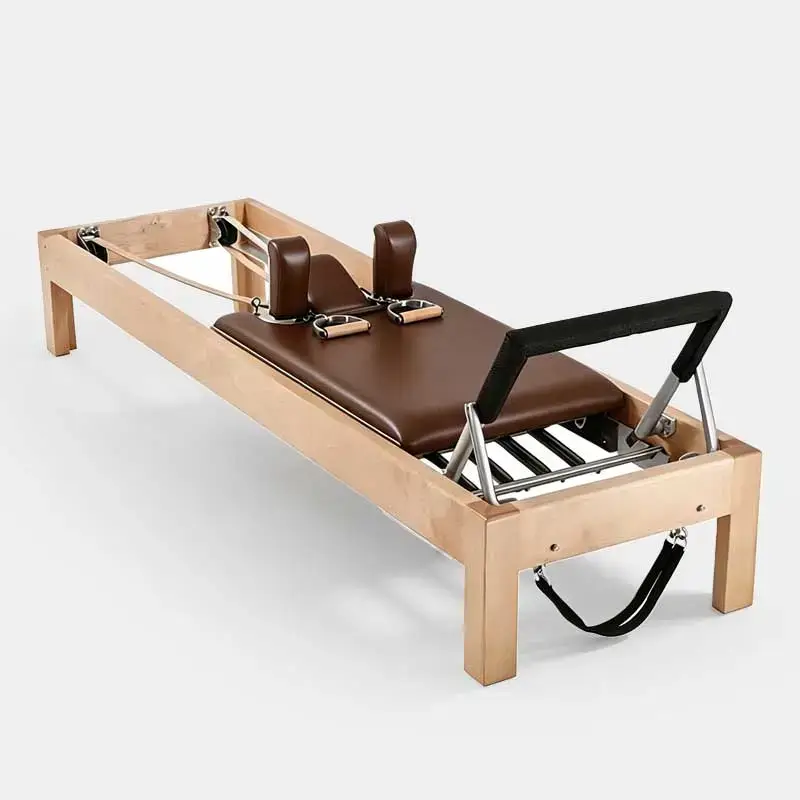
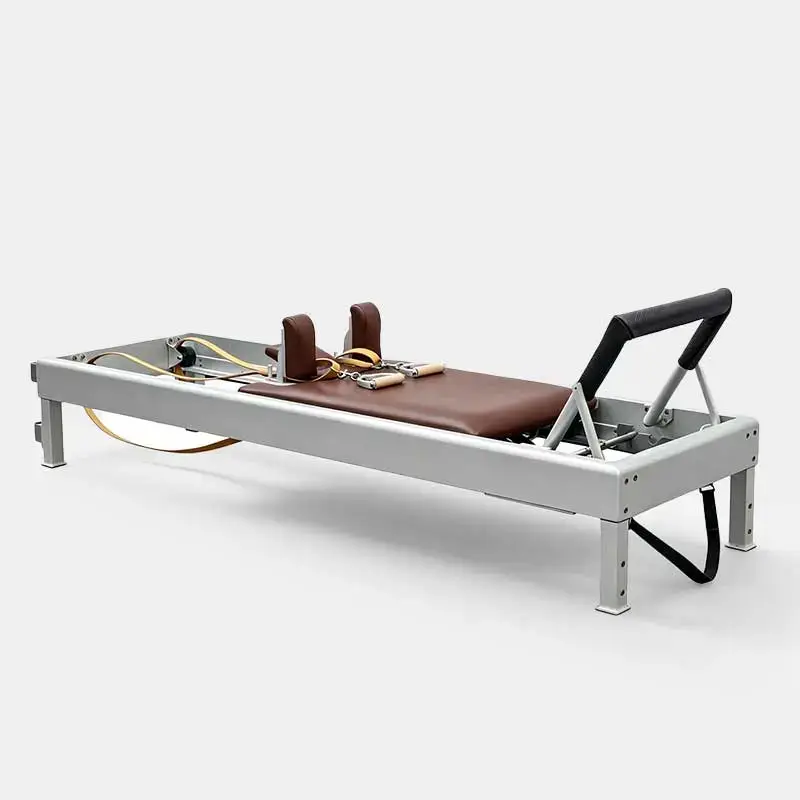
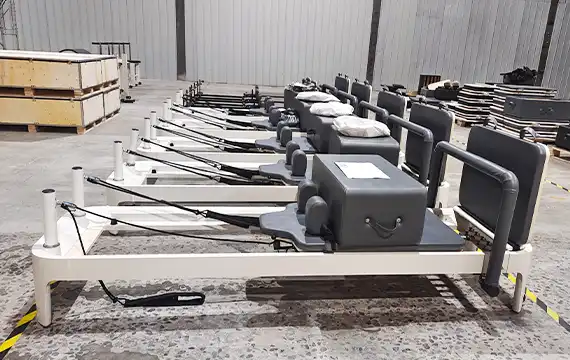
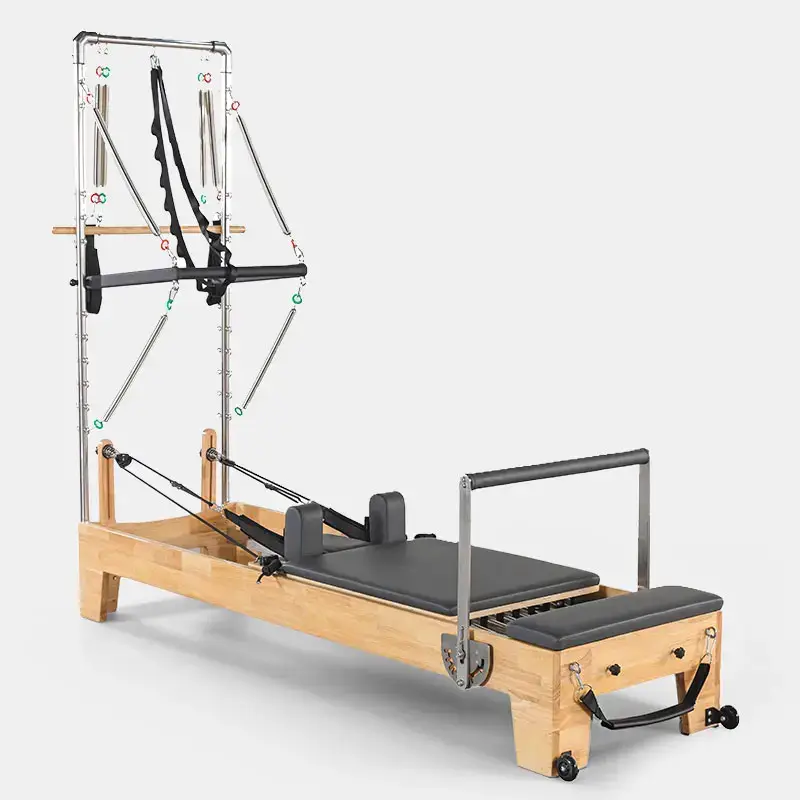
Maple wood reformers are often the preferred choice for premium Pilates studios because they create a warm, luxurious atmosphere and naturally reduce vibration. Aluminium reformers offer a modern appearance, lower maintenance, and greater flexibility for studios that value operational efficiency. The right choice depends on your brand positioning rather than the material alone.
Why Maple Fits Many Boutique Studios
Hard maple has become the classic choice for high end Pilates studios for good reason.
Its natural grain creates warmth that immediately makes a room feel more welcoming.
Many boutique studios, wellness centers, and rehabilitation clinics choose maple because it complements natural materials such as wood flooring, stone surfaces, and soft interior lighting.
Maple also absorbs vibration better than aluminium.
That creates a quieter and more grounded training environment, something many instructors and long-term practitioners appreciate.
For studio owners who want clients to walk in and immediately feel calm, maple often delivers that impression naturally.
Why Aluminium Fits Modern Premium Studios
Premium does not always mean traditional.
Many successful studios now prefer a contemporary design language.
Aluminium reformers offer clean lines, a minimalist appearance, and a lighter visual presence.
They also provide several operational advantages.
Because aluminium is lighter than solid maple, staff can reposition reformers more easily during group classes or studio events.
The material is also highly resistant to humidity, sweat, and daily cleaning chemicals, making it an excellent choice for studios with intensive operating schedules.
For urban Pilates studios that value flexibility and modern aesthetics, aluminium may better support the overall brand image.
Alloy Aluminium vs Wooden Reformers for Large Pilates Chains: What Procurement Teams Consider
Purchasing one reformer is very different from purchasing fifty.
Large Pilates chains think differently from individual studio owners.
Their job is to reduce operating costs, maintain all Pilates equipment quality, easy maintenance, and support future expansion across multiple locations.
Large Pilates chains usually evaluate alloy aluminium and wooden reformers based on total cost of ownership, operational efficiency, maintenance, logistics, and brand consistency rather than frame material alone. The best choice depends on the chain’s long-term business strategy.
Procurement Teams Think Beyond the Purchase Price
One of the biggest differences between a boutique studio and a Pilates chain is how equipment is evaluated.
A boutique studio may purchase six or eight reformers.
A franchise group may purchase hundreds over several years.
That changes everything.
Instead of comparing the initial quotation, procurement teams usually calculate the Total Cost of Ownership (TCO).
This includes:
- Pilates Equipment price
- International shipping
- Installation Easy or not
- Daily maintenance
- Cost of Replacement parts
- Expected service life
The lowest purchase price does not always produce the lowest operating cost.
Why Alloy Aluminium Often Wins for Large Rollouts
For multi-location projects, alloy aluminium frame Pilates equipments offers several operational advantages.
- lighter weight makes transportation, installation, and future room reconfiguration easier.
- Alloy aluminium material also performs well in humid environments and resists sweat, cleaning chemicals, and temperature changes without requiring structural maintenance.
- Alloy aluminium extrusion provides excellent dimensional unify.
- Alloy aluminium Pilates reformers allows manufacturers to produce highly standardized reformers across different production batches.
- For procurement teams responsible for dozens of studios, that consistency reduces installation issues, simplifies staff training, and improves spare parts compatibility.
Why Wooden Reformers Still Matter
Wooden reformers continue to play an important role in many premium Pilates brands.
Maple creates a warm, welcoming atmosphere that many boutique studios and rehabilitation centers value highly.
It also supports premium brand positioning.
For flagship studios, luxury wellness centers, and high-end rehabilitation clinics, the visual experience often becomes part of the customer journey.
Many premium brands intentionally choose maple because the equipment reinforces the atmosphere they want clients to experience.
Which Reformer Material Offers Better Long-Term Value for Studios?
Purchase price is easy to compare.
Long-term value is much harder.
I believe studio owners should think beyond the first invoice.
A commercial reformer may remain in service for ten years or longer.
The real investment includes maintenance, repairs, client satisfaction, and business reputation.
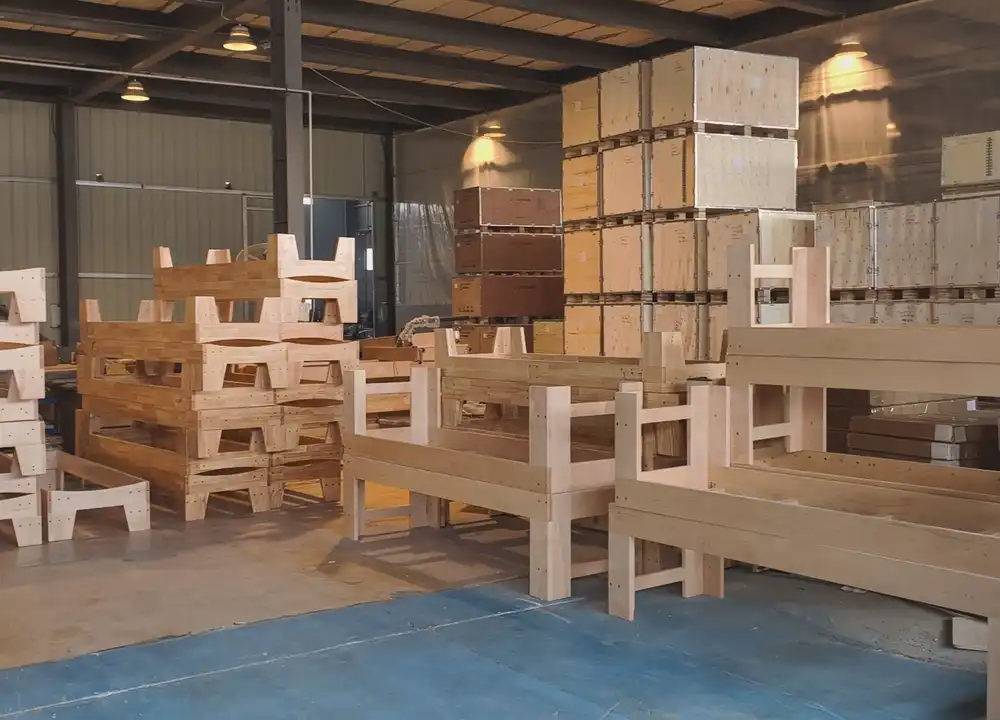
The long-term value of a Pilates reformer depends on much more than the frame material. Commercial buyers should evaluate operating costs, maintenance, durability, client experience, resale value, and manufacturer support before deciding whether maple wood or aluminium provides the better investment.
Total Cost of Ownership Matters
I often encourage buyers to calculate:
- Purchase price
- Shipping
- Installation
- Maintenance
- Replacement parts
- Downtime
- Expected service life
This gives a much clearer picture of real cost.
Why Aluminium Often Delivers Better Operational Value
For many commercial studios, aluminium provides excellent long-term operational efficiency.
Its resistance to humidity, sweat, and cleaning chemicals reduces structural maintenance.
The lighter frame also makes installation, studio reconfiguration, and equipment replacement much easier.
For studio groups operating multiple locations, these small operational advantages accumulate over many years.
Lower handling costs.
Faster installations.
Simpler maintenance.
More consistent equipment across different studios.
All of these contribute to a lower total cost of ownership.
Why Maple Can Create Higher Business Value
Maple creates value in a different way.
A premium maple reformer does more than support exercise.
It also supports the studio’s brand.
Many boutique studios choose maple because it creates a quieter, warmer, and more luxurious environment.
That atmosphere becomes part of the client experience.
Clients often associate premium surroundings with premium instruction.
In many cases, that stronger first impression helps justify higher membership fees and strengthens long-term customer loyalty.
The additional investment in maple may therefore generate value that cannot be measured by maintenance costs alone.
Compare Value, Not Just Materials
Studio Expansion Project
Several years ago, I worked with two studio owners who expanded their businesses at almost the same time.
The first owner selected aluminium reformers for every location.
His goal was simple.
He wanted identical equipment across all studios, lower maintenance requirements, and faster installation whenever a new location opened.
The second owner made a different decision.
She invested in premium maple reformers for her flagship studio because she wanted every client to experience a calm, luxurious environment from the moment they entered the room.
Both projects succeeded.
The difference was not the material.
It was that each owner understood how the equipment supported the business they wanted to build.
That experience reinforced something I now tell every commercial buyer.
Do not ask:
“Which material has the better long-term value?”
Ask a much more important question:
“Which material creates the greatest long-term value for my business model?”
Because the right answer is rarely determined by the frame alone.
It is determined by how well the reformer helps your studio grow, operate efficiently, and deliver a better experience for every client over the next ten years.
What Can Be Customized on Maple Wood and Aluminium Reformers?
Many studio owners want more than standard equipment.
They want reformers that match their own brand.
Customization helps studios create a unique identity while improving the client experience.
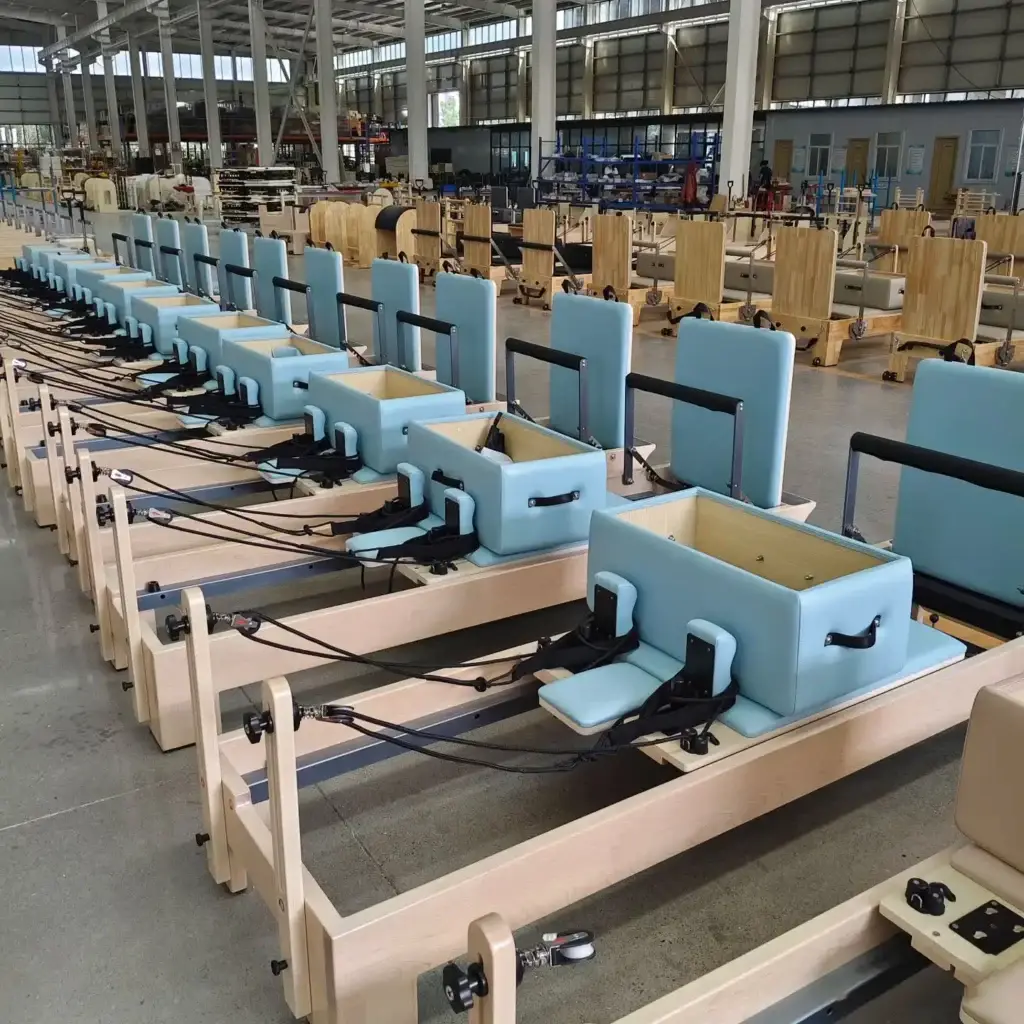
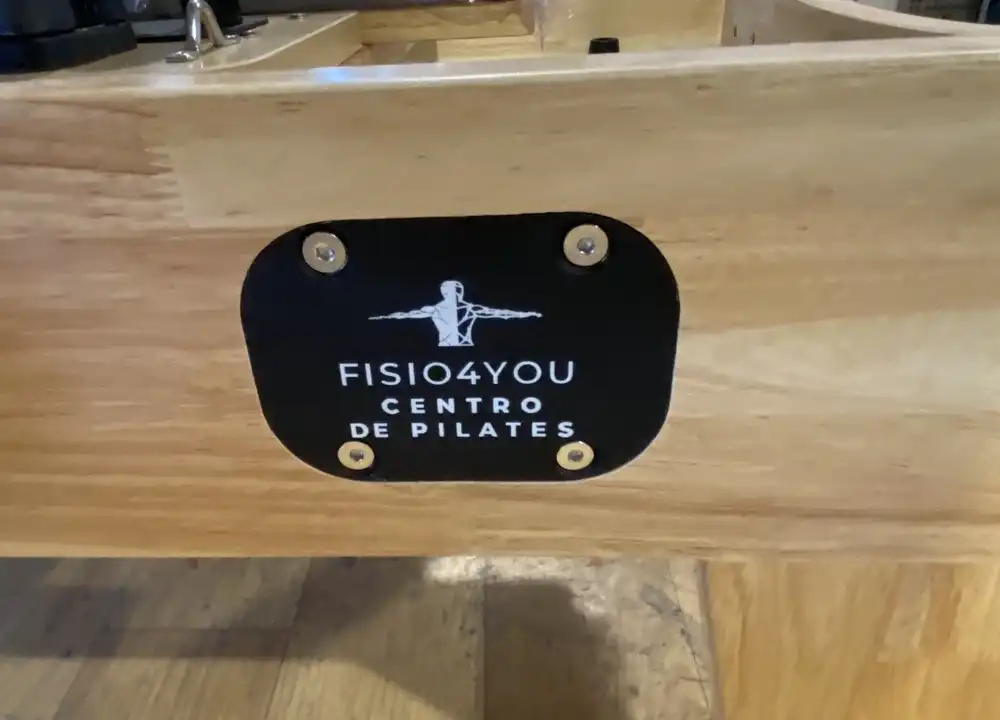
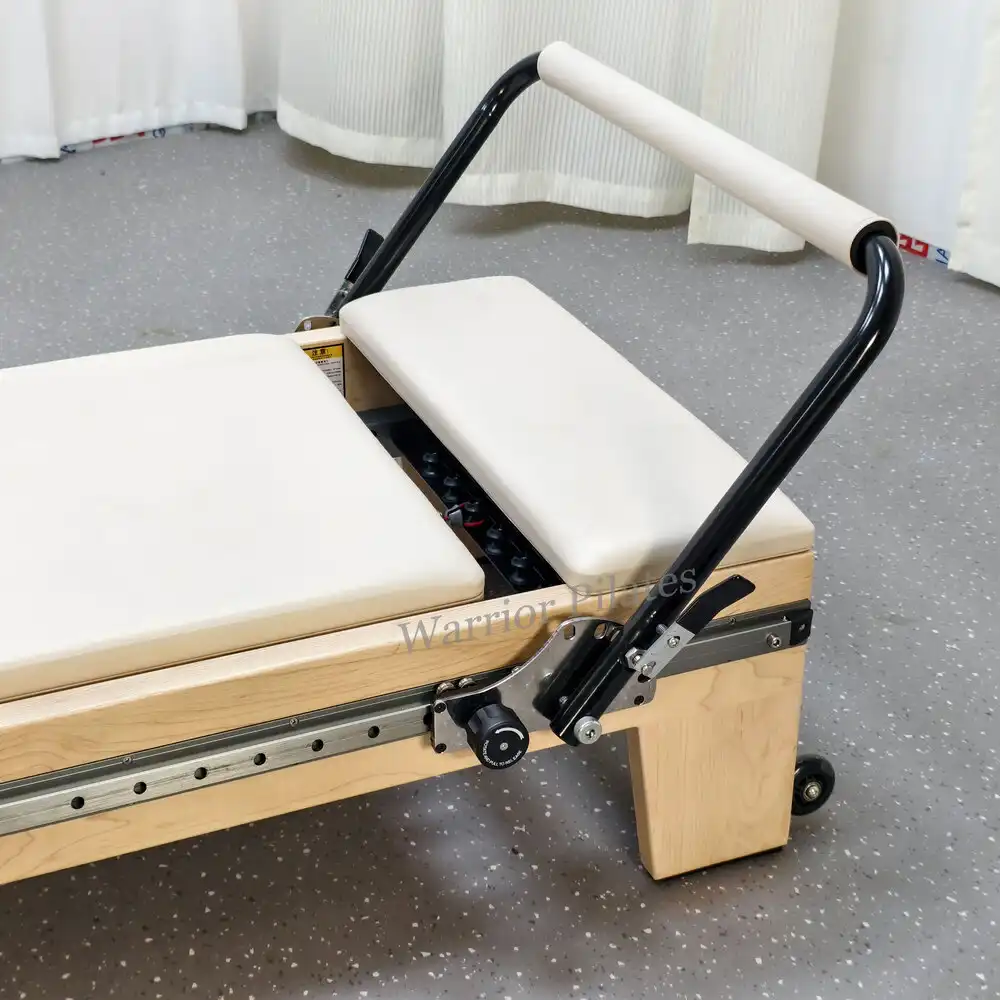
Both maple wood and aluminium reformers can be customized with different finishes, upholstery, dimensions, logos, accessories, and packaging to match commercial branding and project requirements.
Common Customization Options
Modern manufacturers can customize many parts of a reformer.
Examples include:
- Frame color
- Wood finish
- Aluminium coating
- Upholstery color
- Logo engraving
- Embroidery
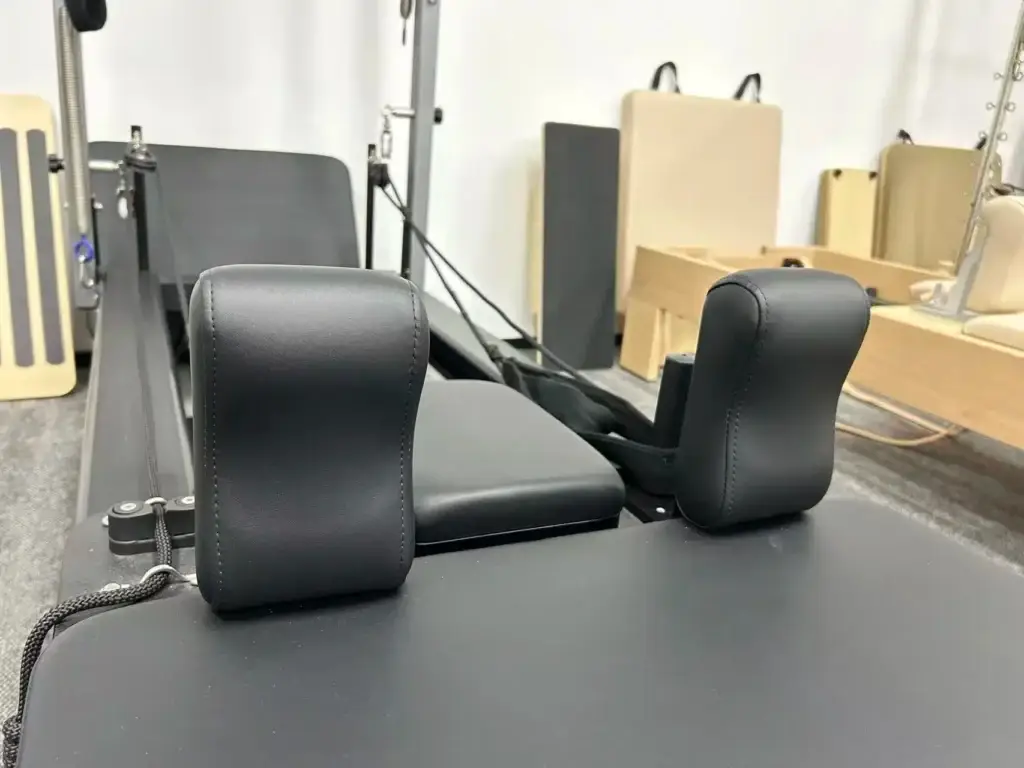
- Footbar design
- Carriage dimensions
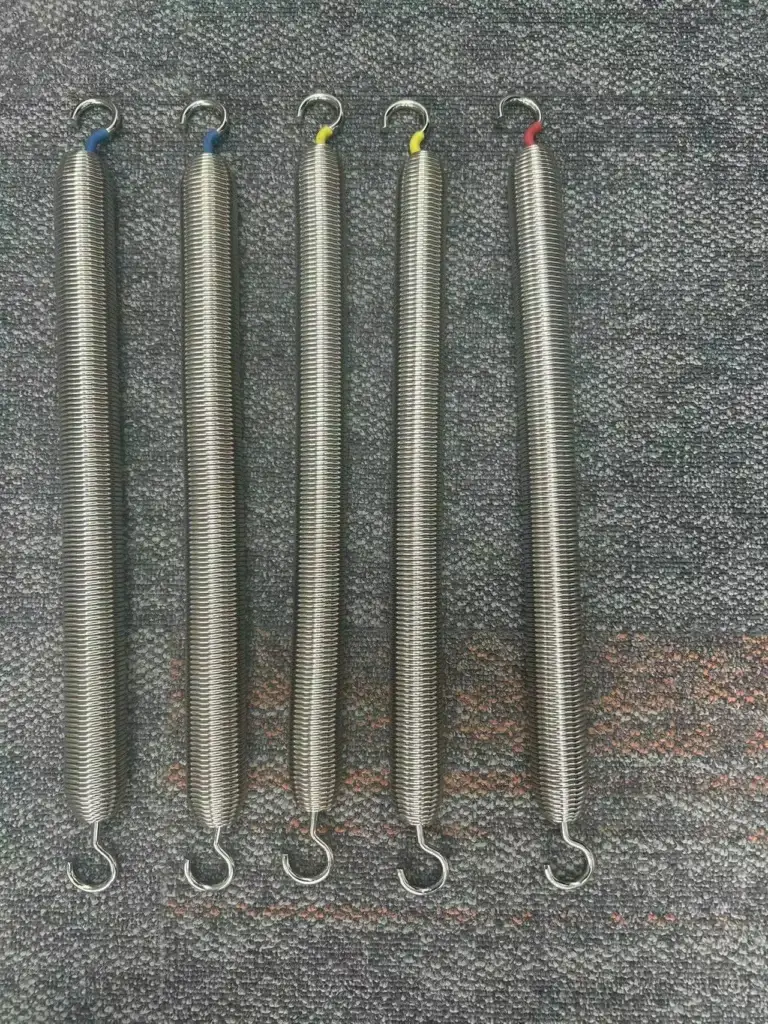
- Spring configuration
- Accessories
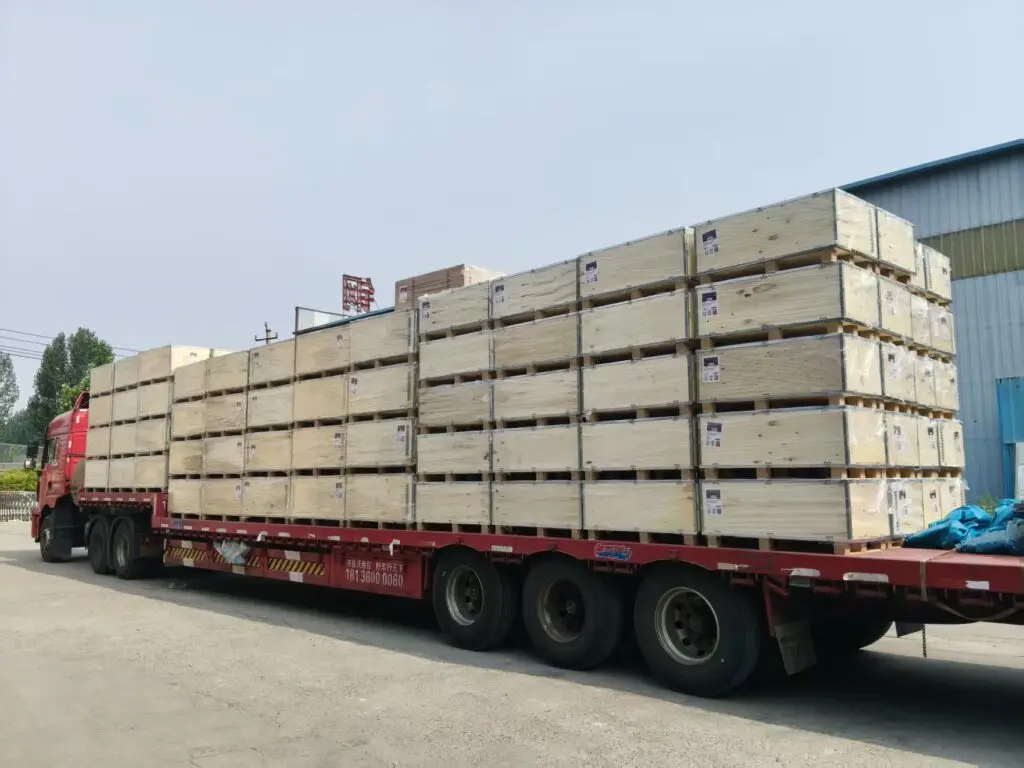
- Packaging
Conclusion
After working with both maple wood and aluminium Pilates reformers for many years, I have reached one simple conclusion.
There is no perfect material.
There is only the right material for the right studio.
Maple wood offers warmth, timeless design, excellent vibration damping, and a premium appearance.
Aluminium offers lightweight strength, modern styling, and outstanding dimensional stability.
Both materials can perform exceptionally well when they are designed, manufactured, and inspected correctly.
When I help studio owners choose equipment, I rarely begin with the frame.
I begin with their business.
I ask about their clients, their instructors, their long-term goals, and the experience they want to create.
Only then do I recommend the material.
In the end, successful studios are not built by choosing maple or aluminium.
They are built by choosing equipment that supports safe movement, reliable performance, and sustainable business growth.
Reference
- Forest Products Laboratory. (2021). Wood Handbook: Wood as an Engineering Material. U.S. Department of Agriculture, Forest Service.
- Glass, S. V., & Zelinka, S. L. (2010). Moisture Relations and Physical Properties of Wood. USDA Forest Products Laboratory.
- Ross, R. J. (Ed.). (2021). Wood Handbook: Mechanical Properties of Wood. USDA Forest Products Laboratory.
- International Organization for Standardization. (2015). ISO 9001:2015 Quality Management Systems — Requirements.
- Industry articles and buyer discussions reviewed for search intent analysis, including Peak Primal Wellness, Bilink Pilates, Flexity Life, Wavar, BK Pilates, Fit Boutique, AOC Pilates, The Pilates Room NYC, MCoreFit, Reddit discussions, and relevant YouTube educational content.